Behind the build

The back of the wall: the frames, braces and cables that hold it up.

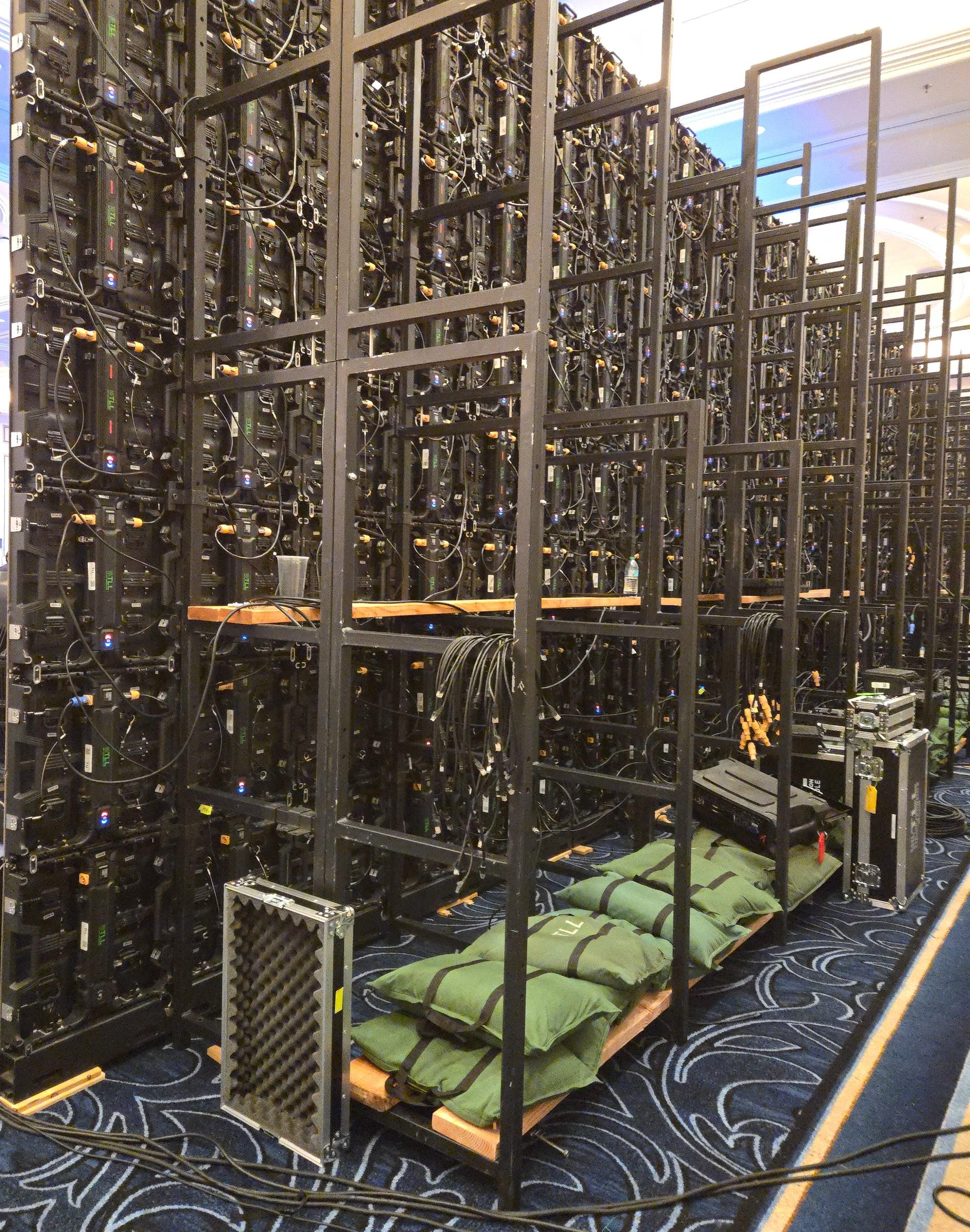
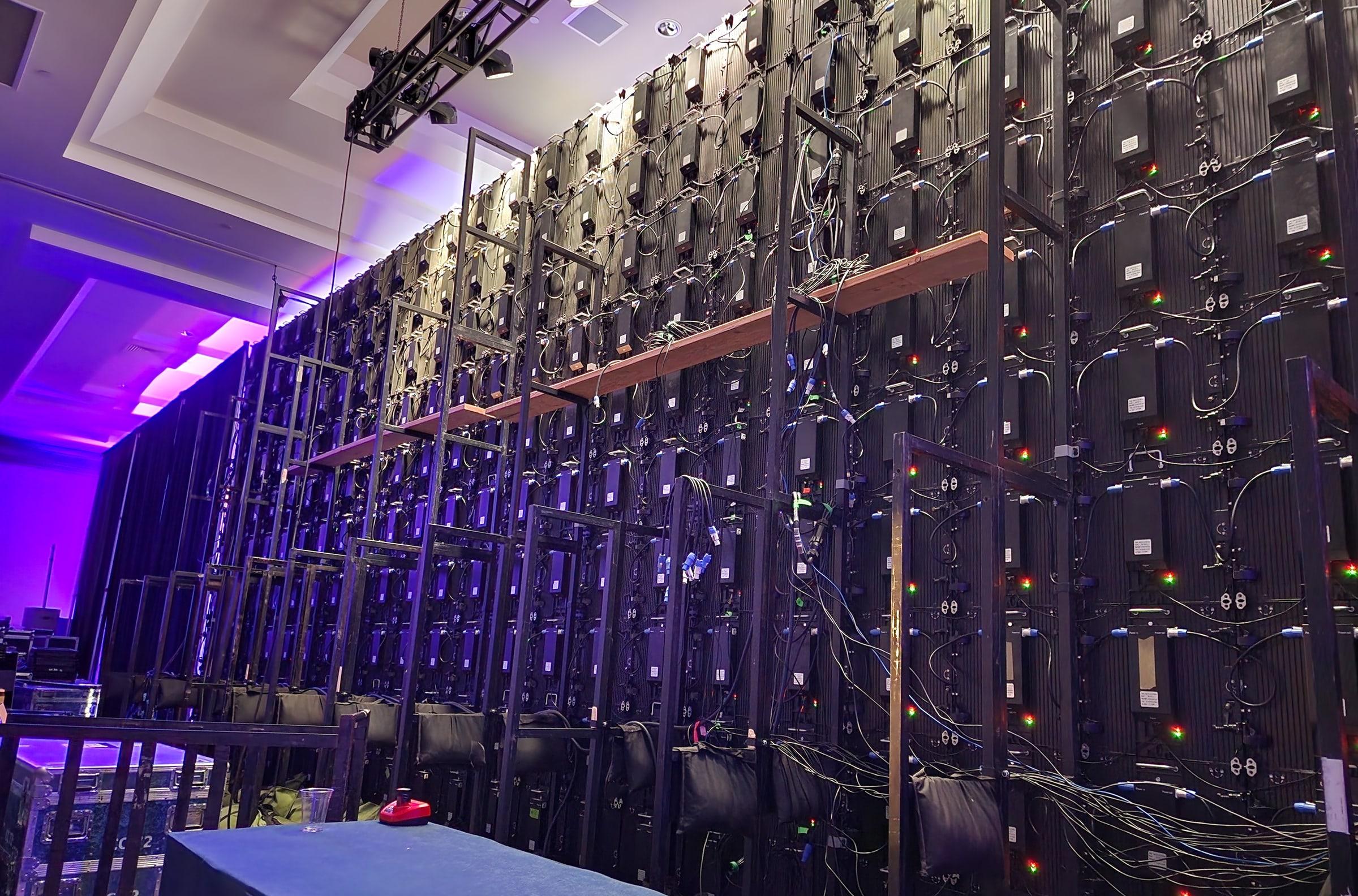
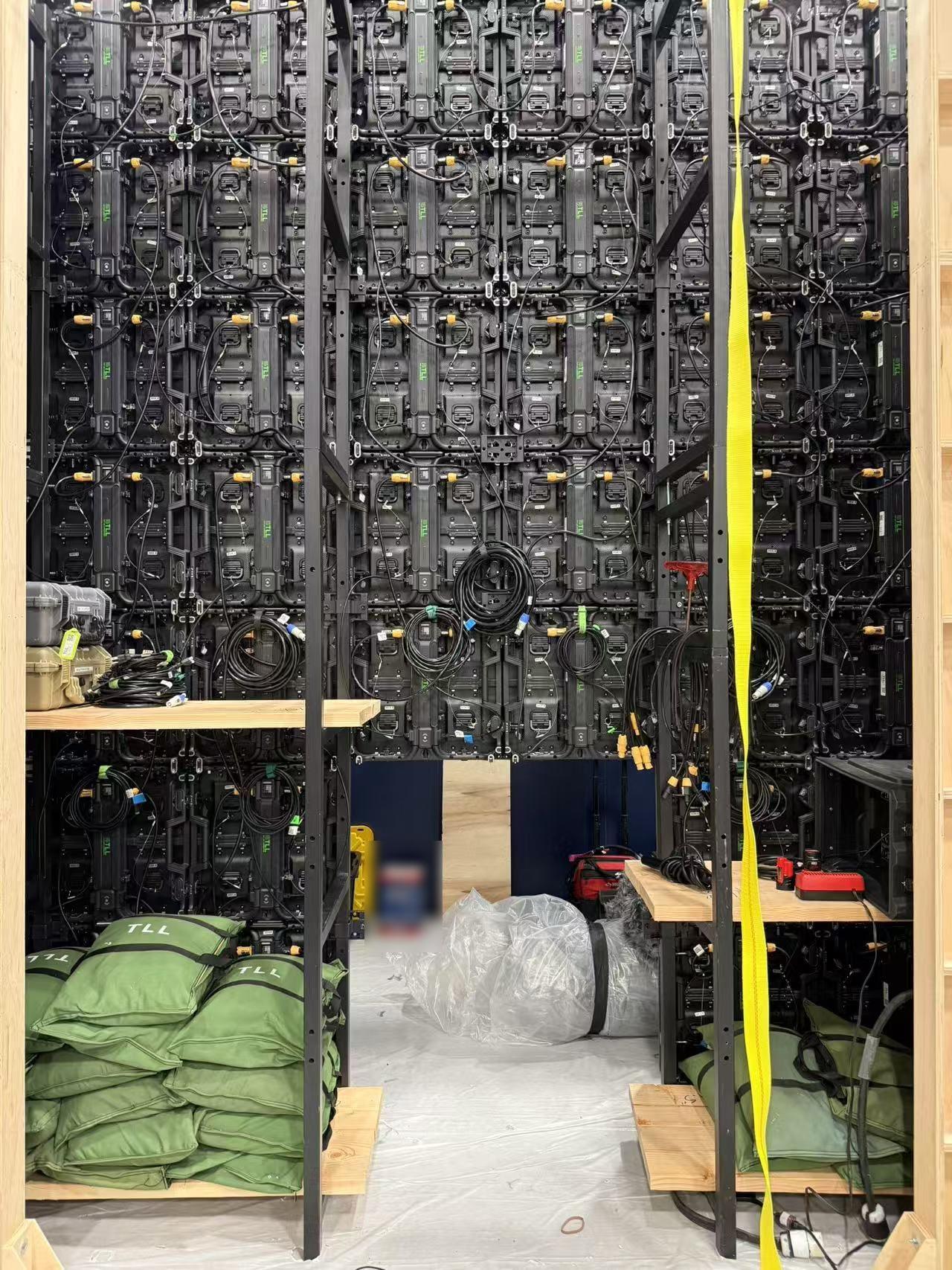
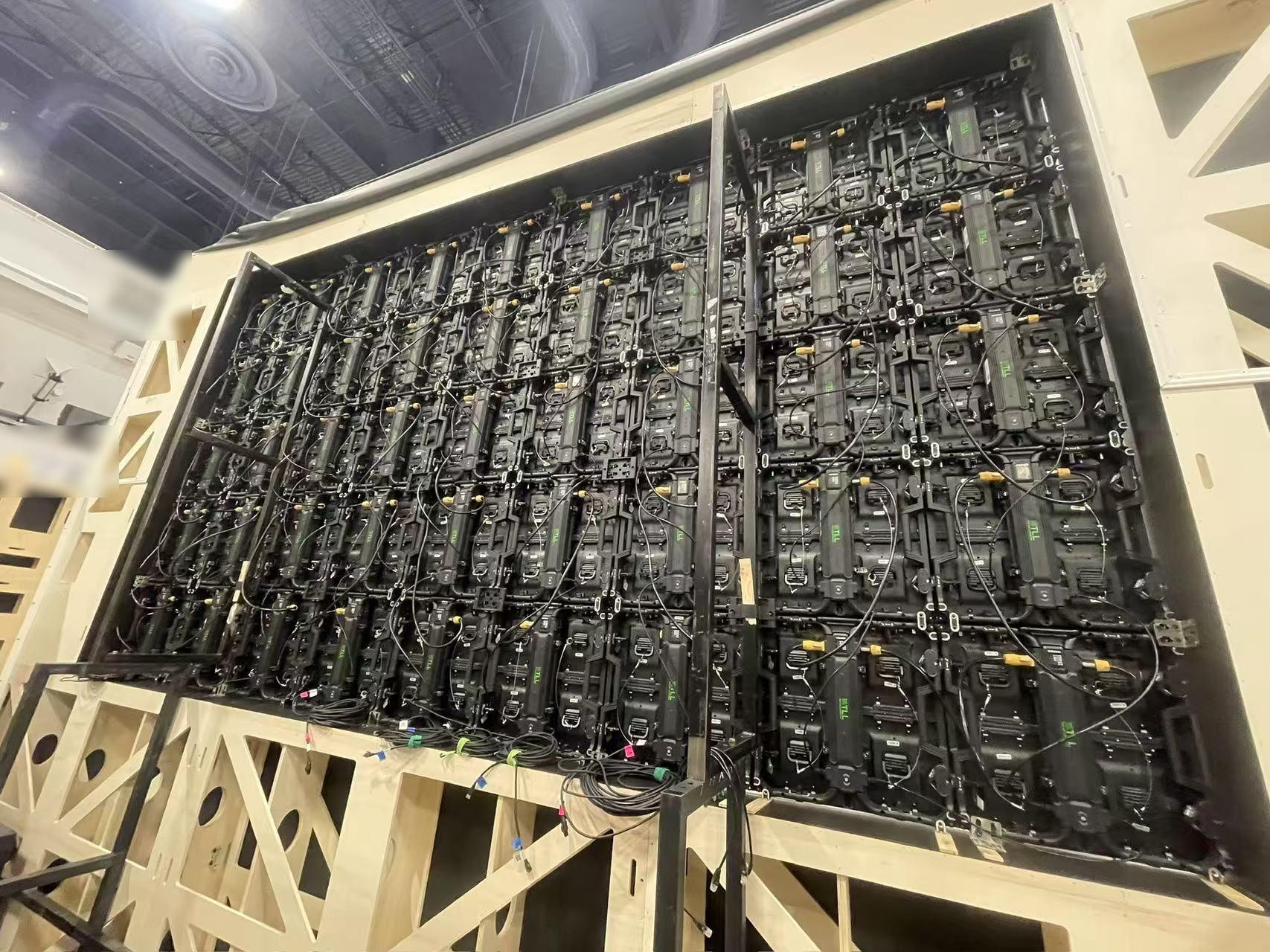
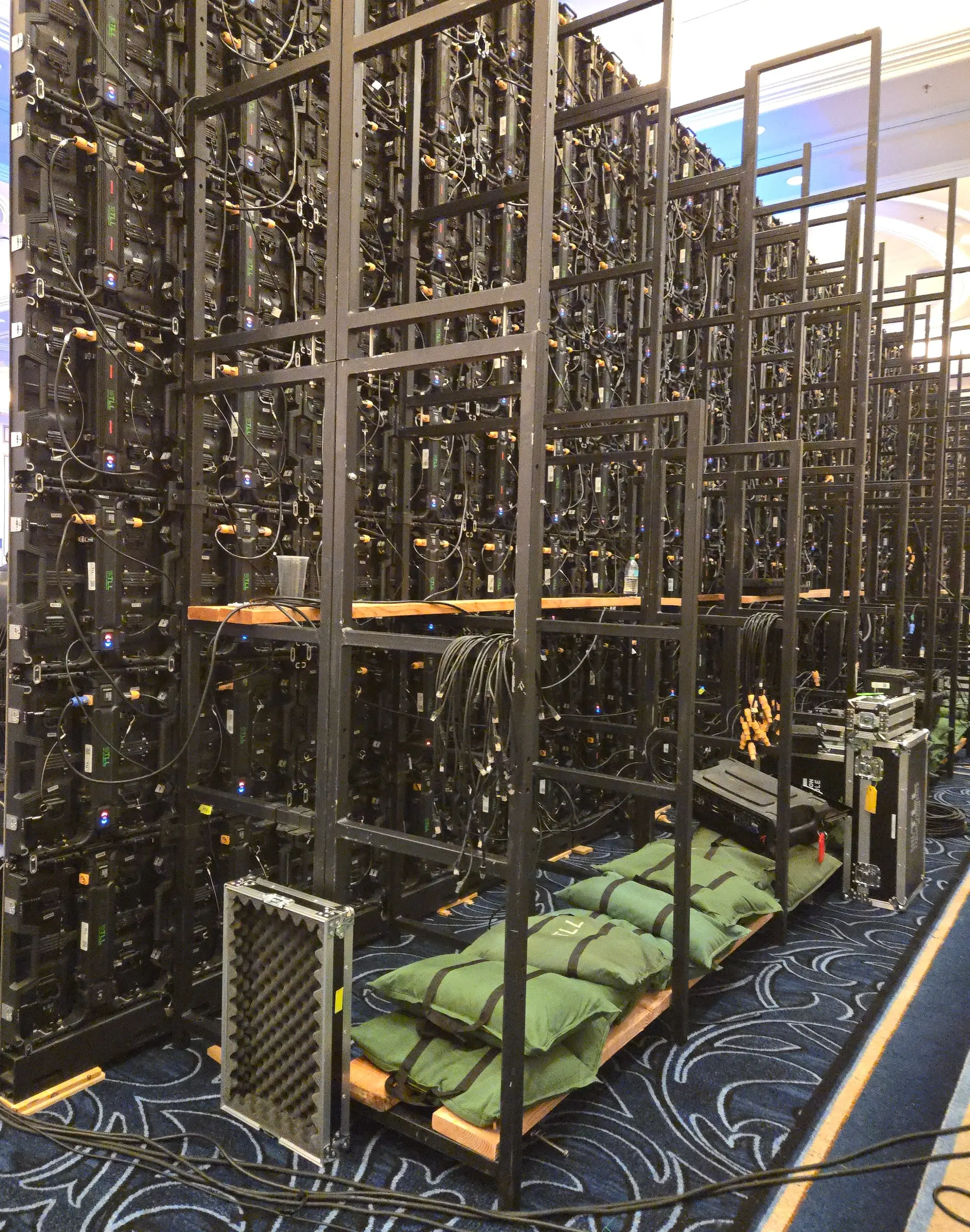
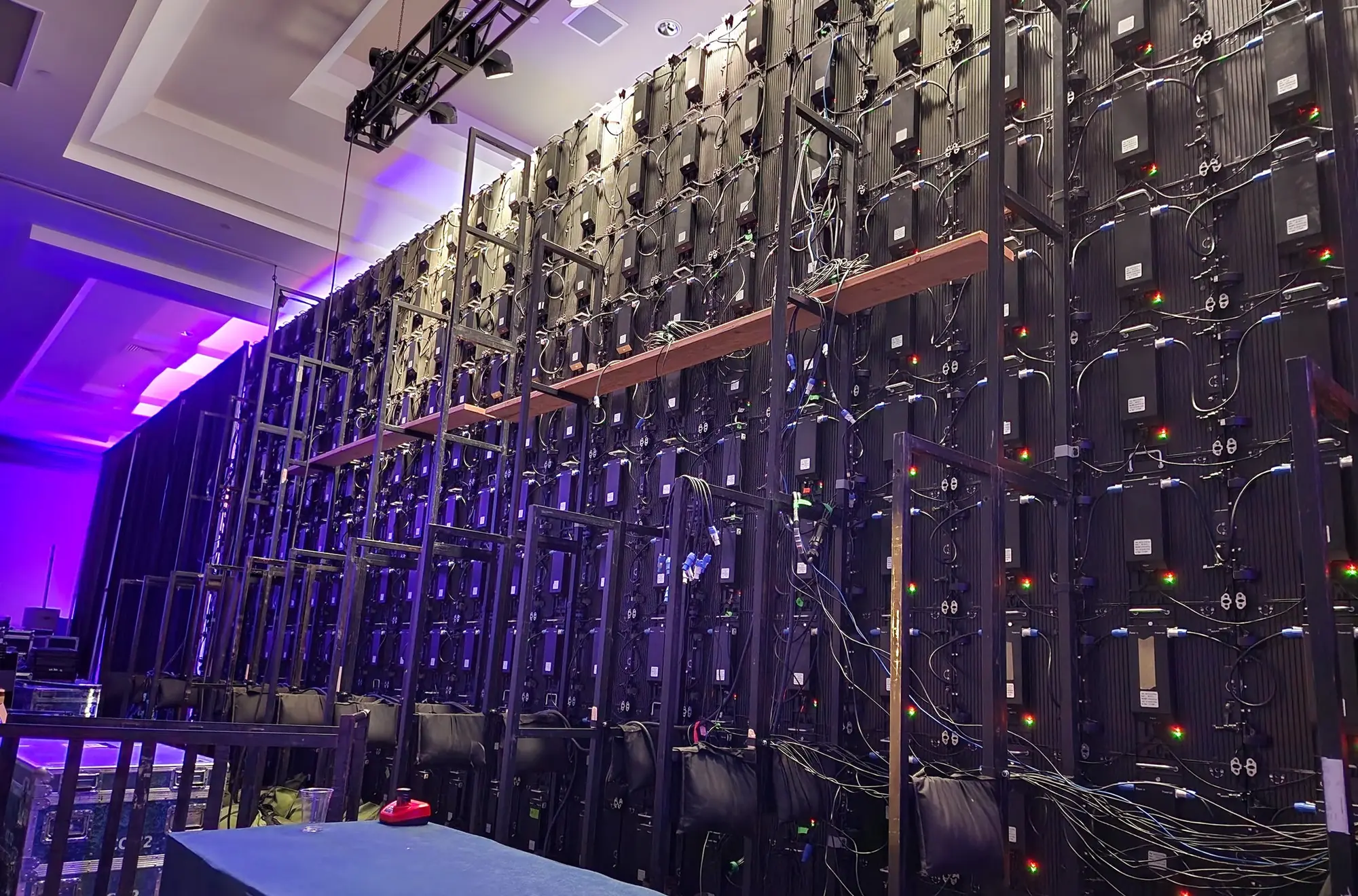
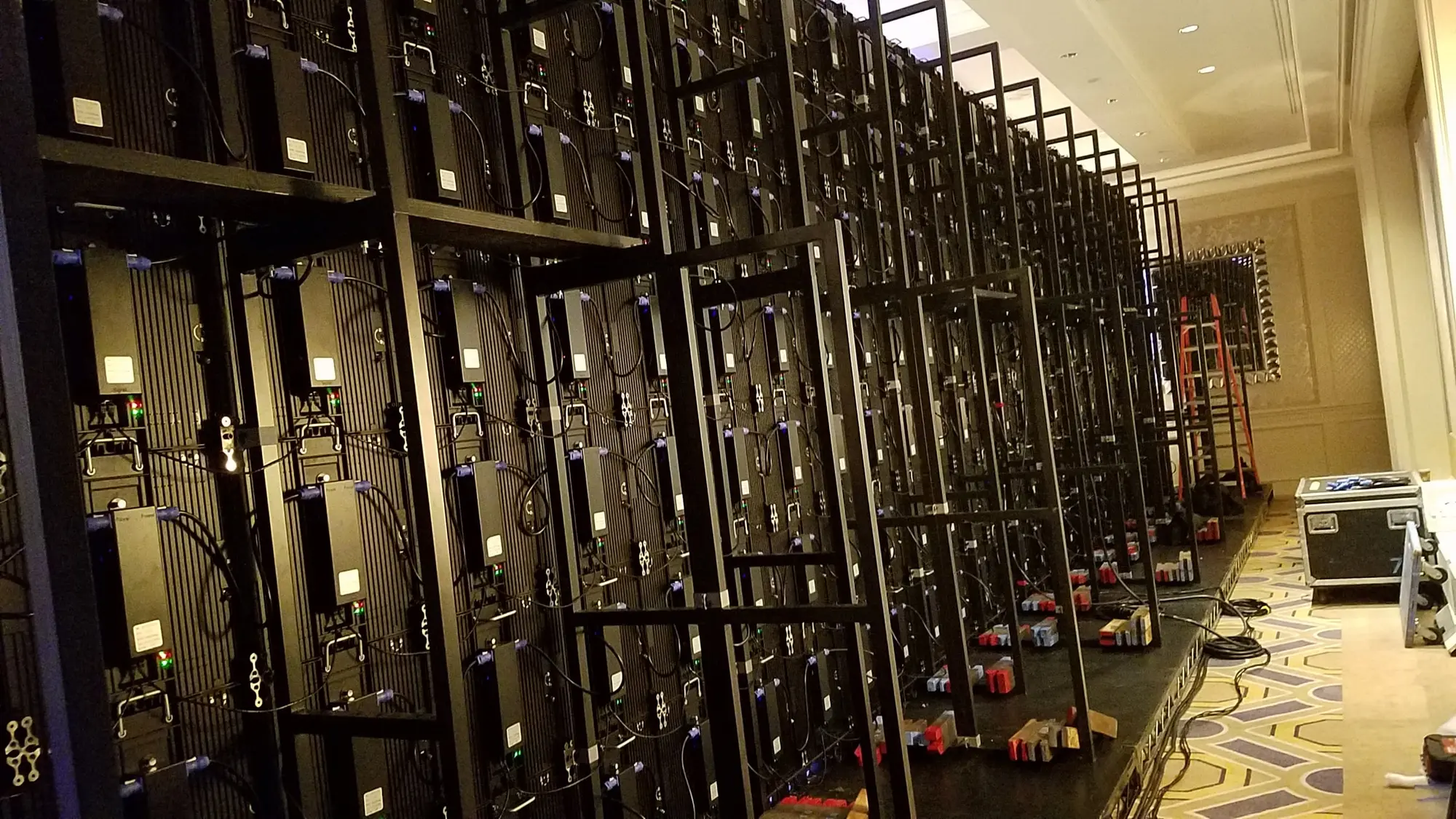
  1. Back of a long ground-supported LED wall in a hotel ballroom: black steel ladder frames behind the panels, with green sandbags on boards across their bases Photo 1
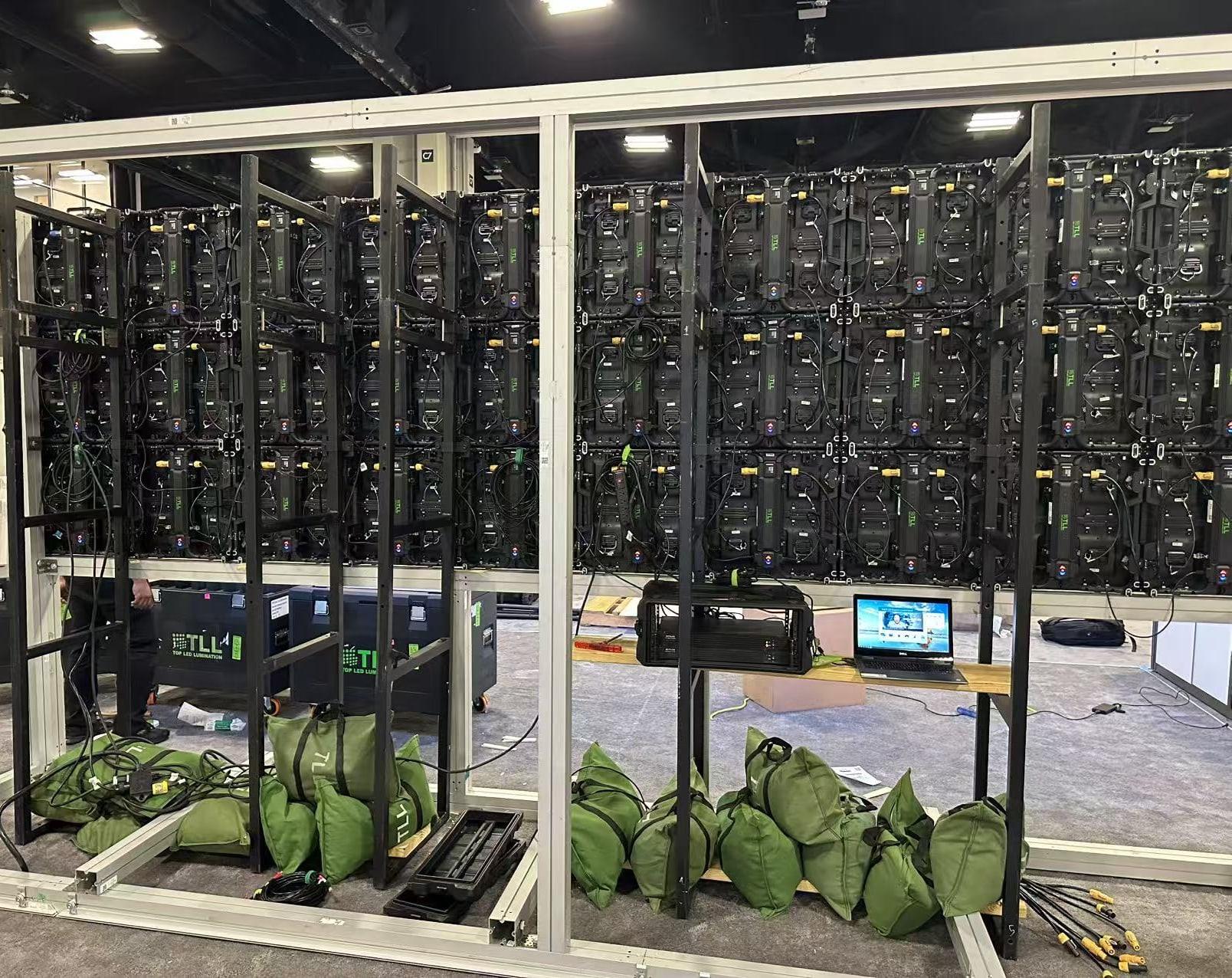
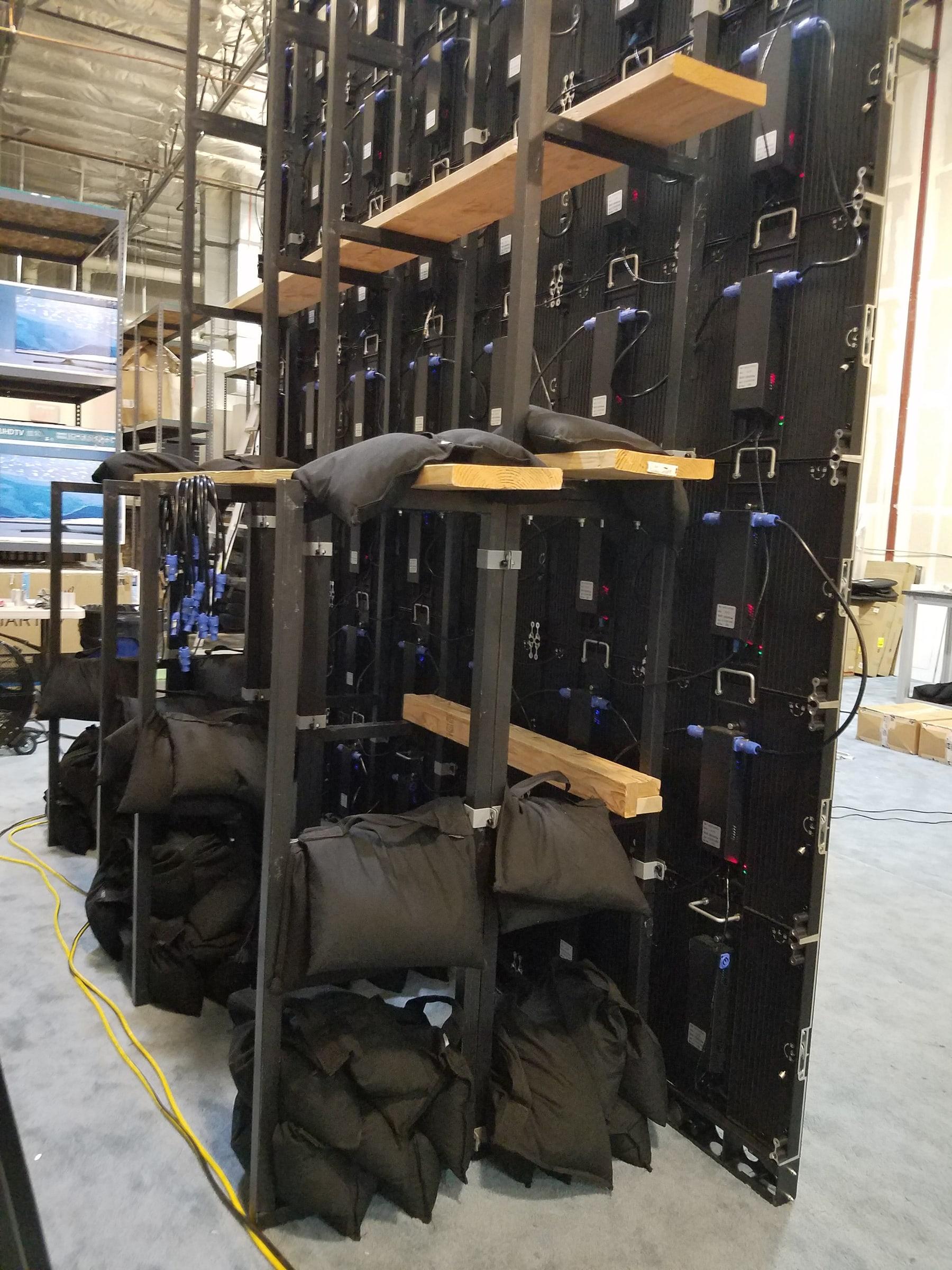
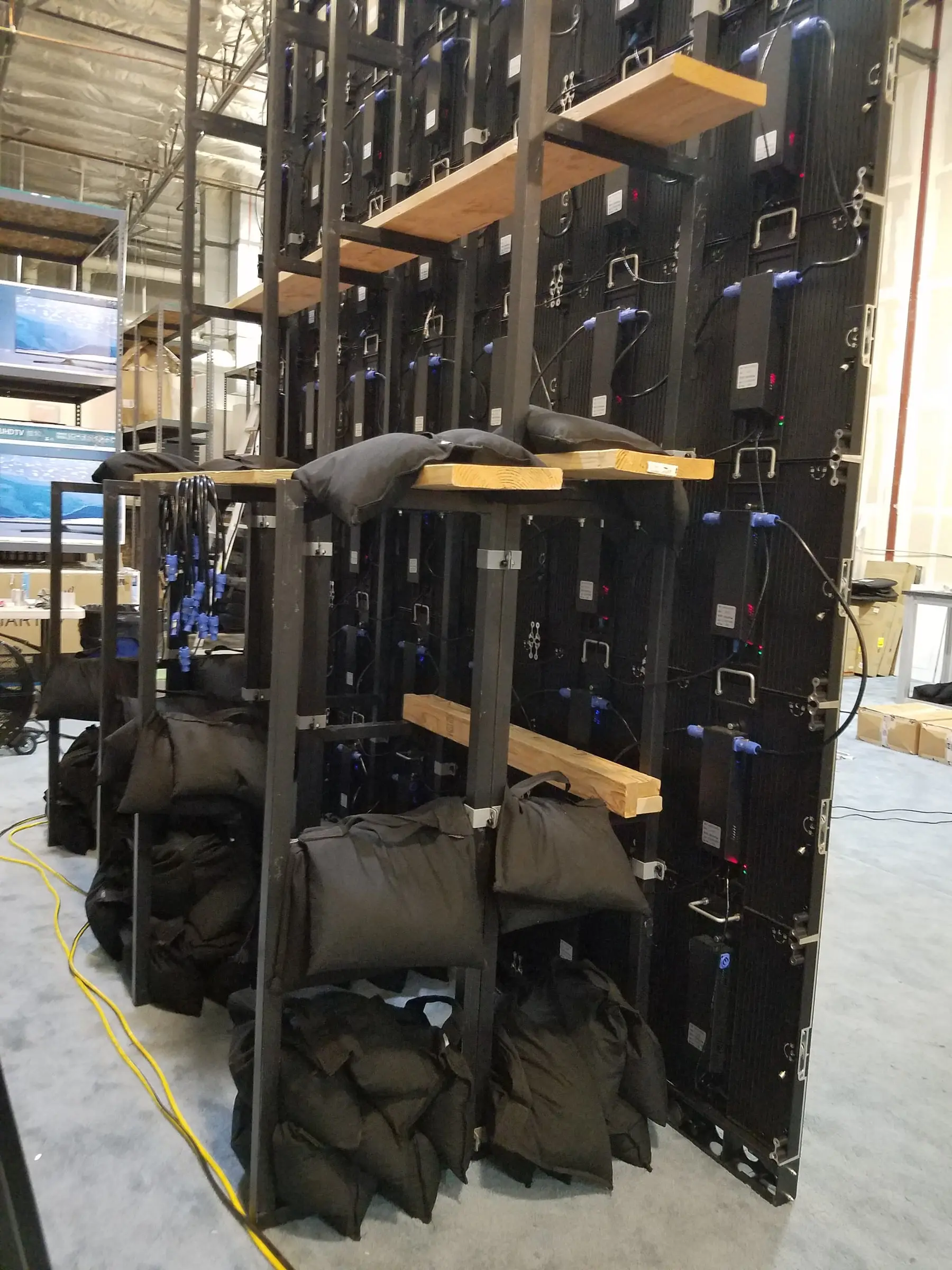
  2. Back of a raised LED wall on black steel frames that stand on the floor, weighted with green sandbags, with a shelf across the frames for the control gear Photo 2
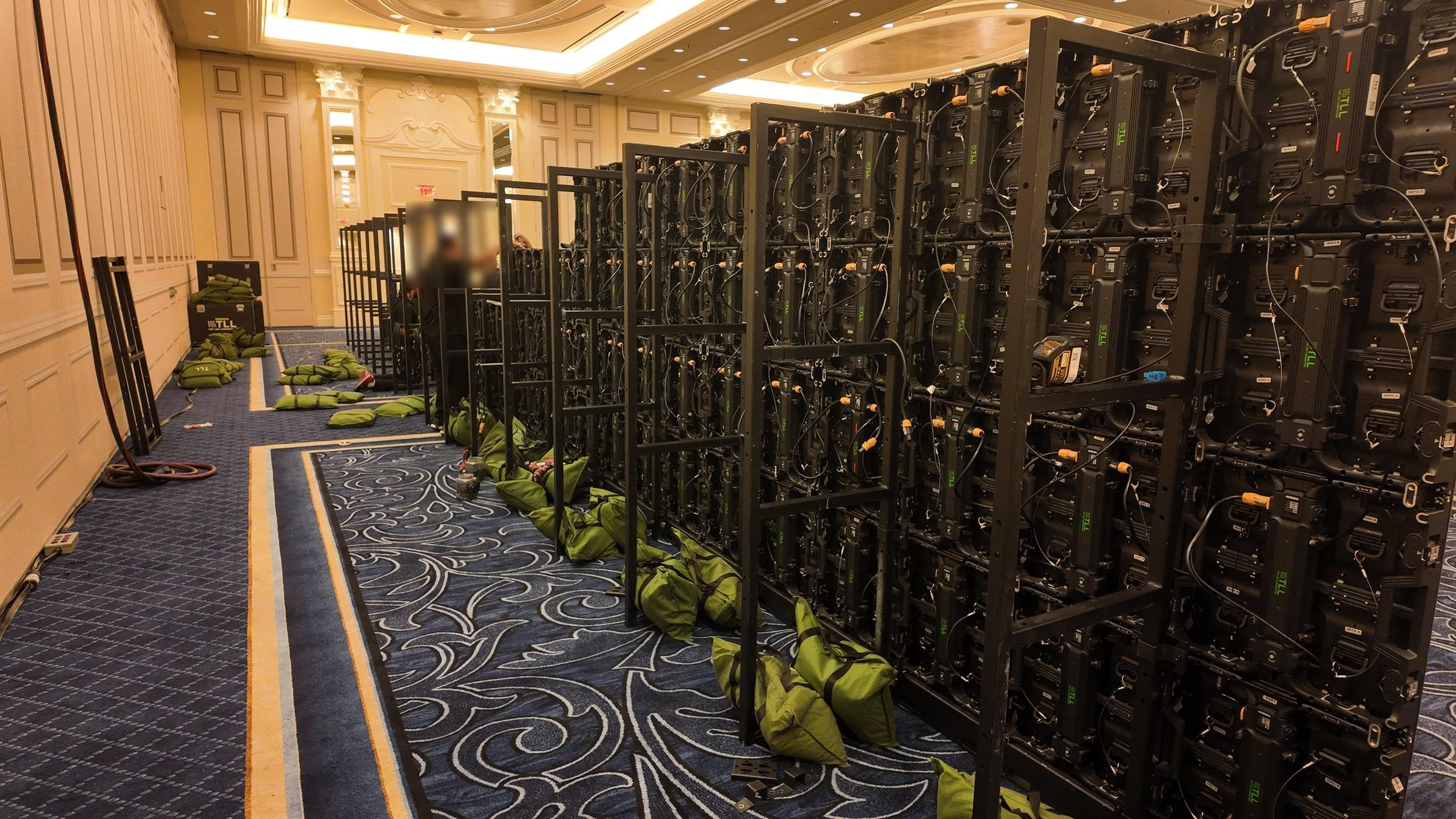
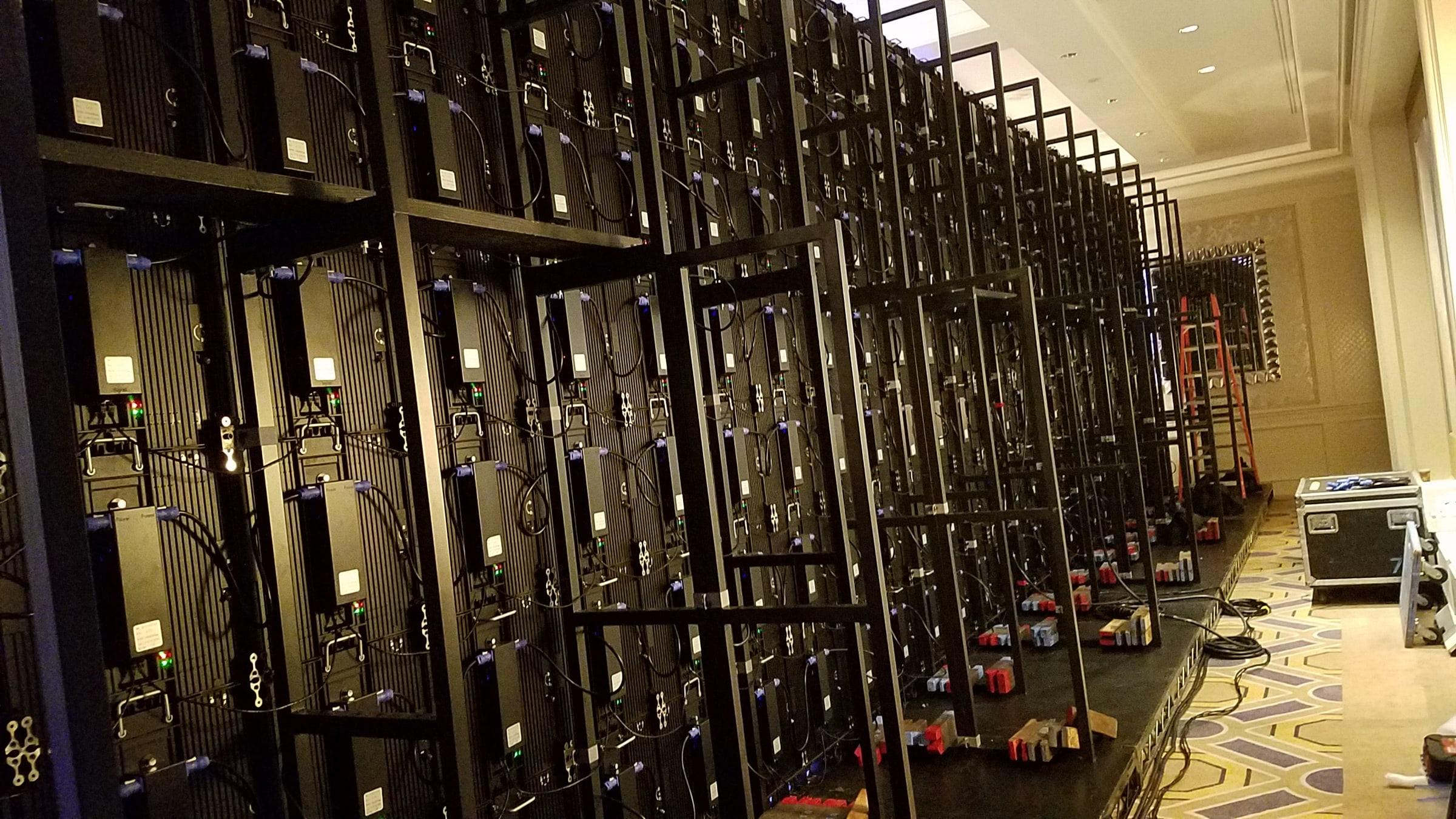
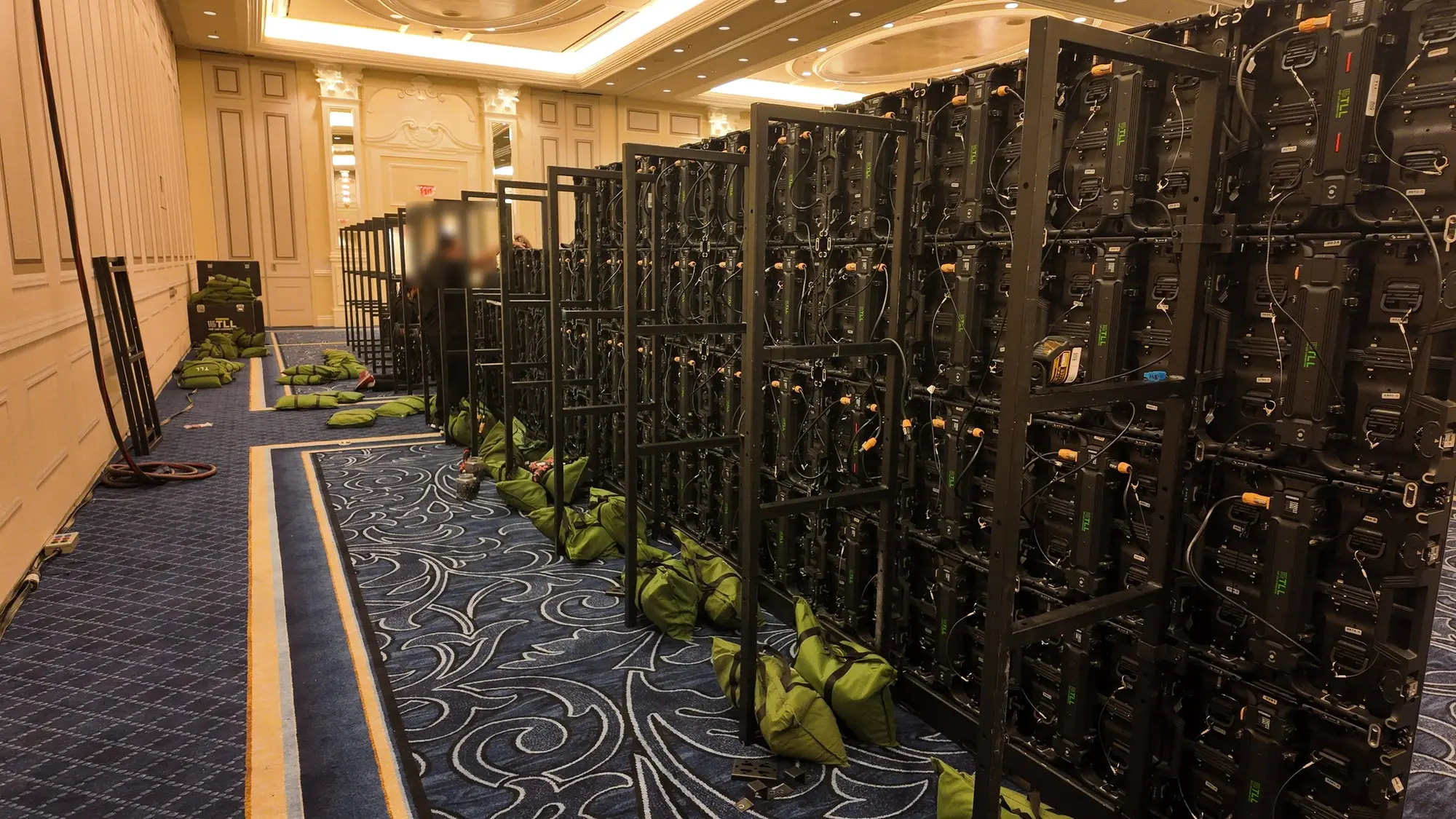
  3. A long LED wall going up in a hotel ballroom, seen from the back: black steel ladder frames behind each section and green sandbags laid out along the base Photo 3
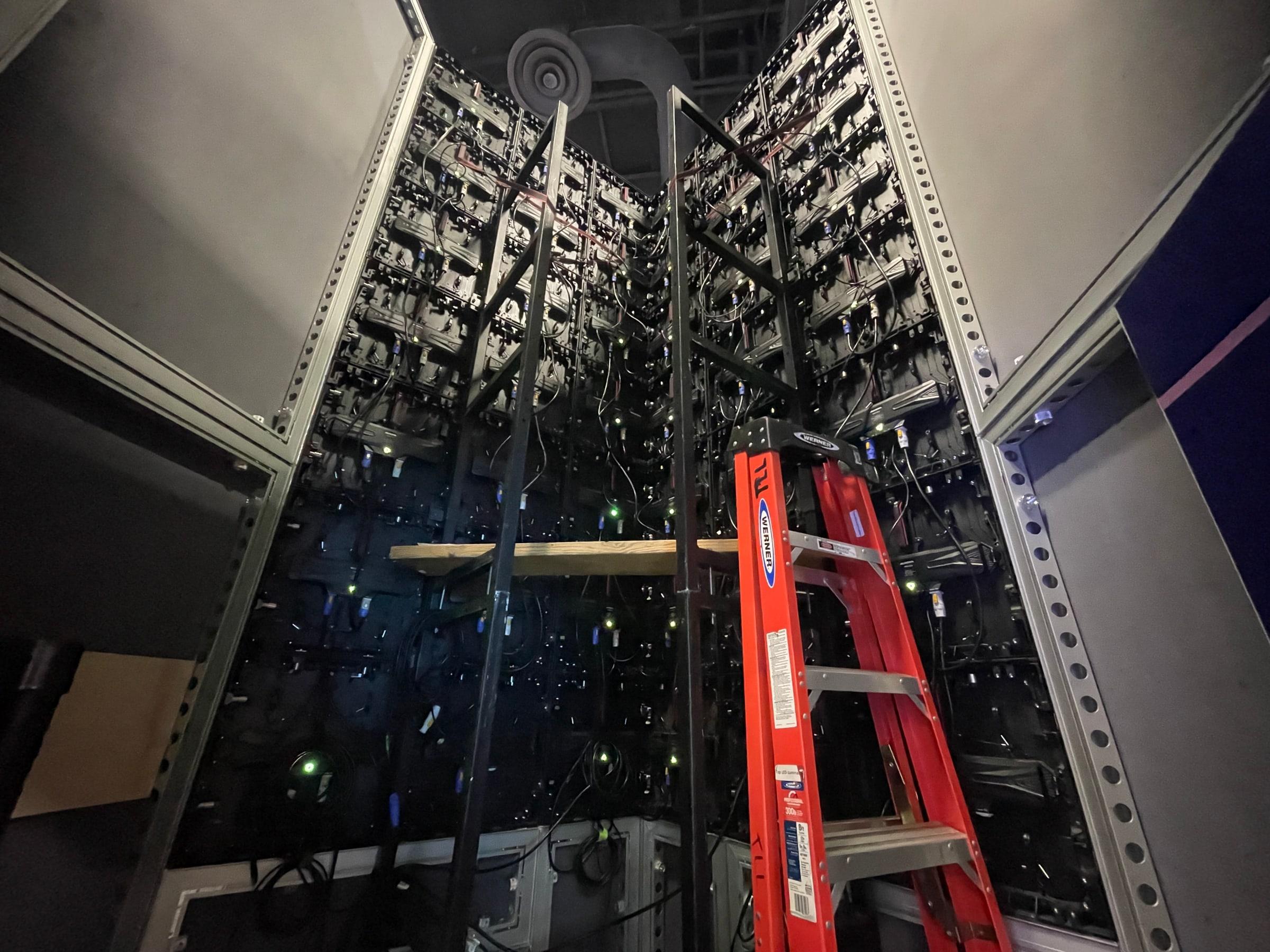
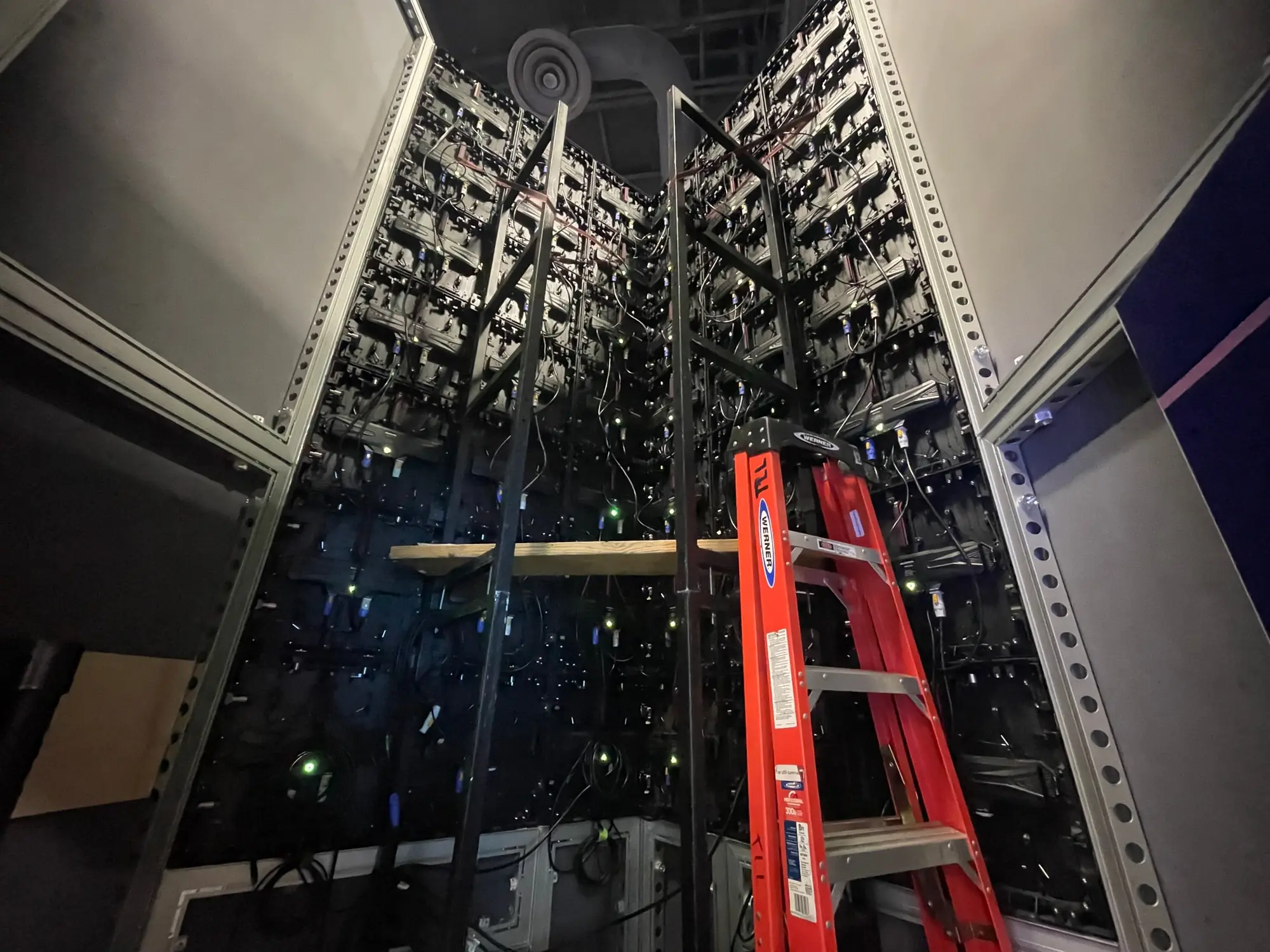
  4. Looking up inside an LED tower: the backs of two LED faces meet at the corner, held by black steel frames inside the tower's metal frame, with a ladder for the crew Photo 4
  5. Back of a long LED wall in a ballroom, held up by tall black steel frames that stand on the floor, with sandbags hung low on the frames for weight Photo 5
  6. Back of a tall LED wall held up by black steel ladder frames, with wood boards across them and black sandbags hung on the frames and piled at the base Photo 6
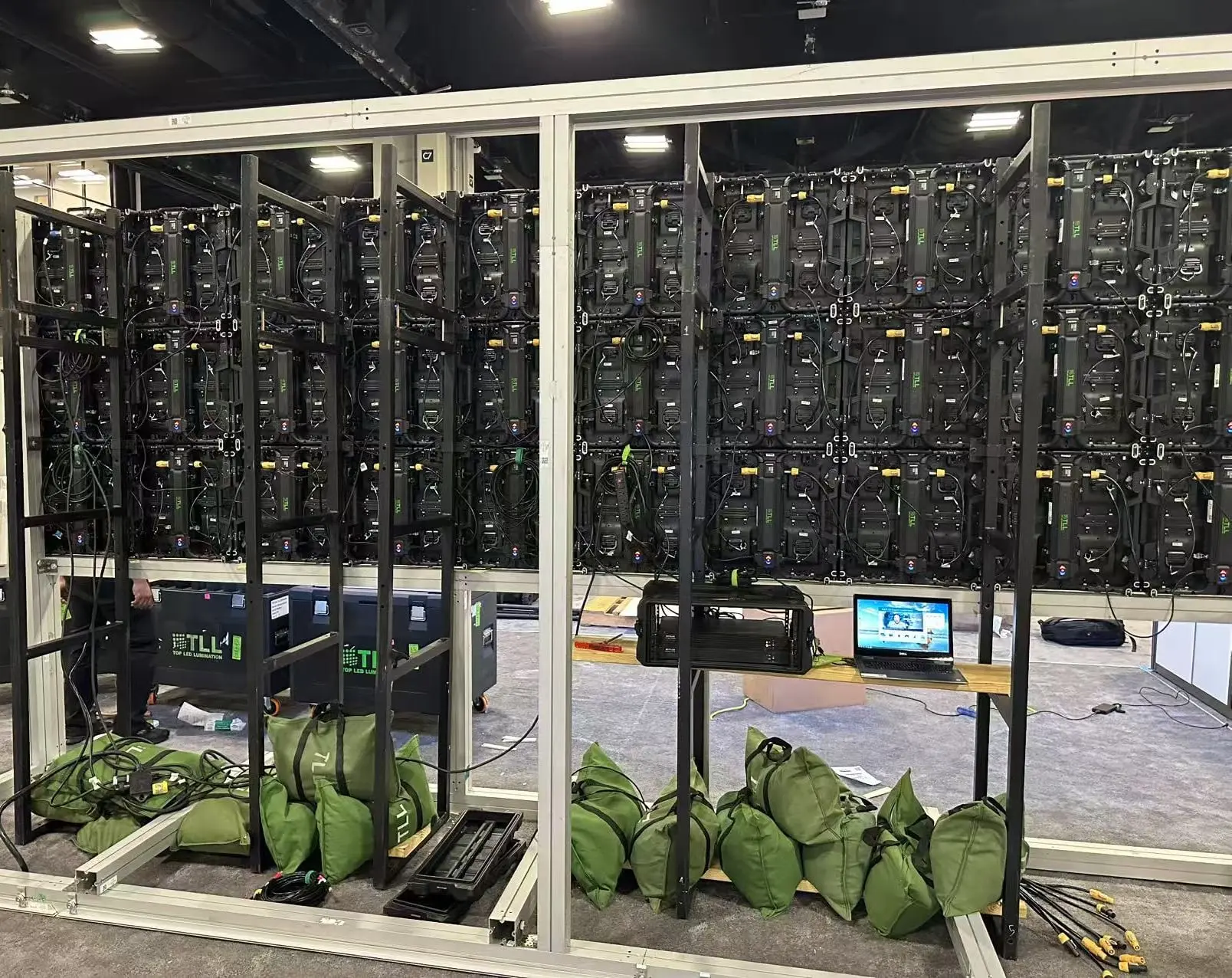
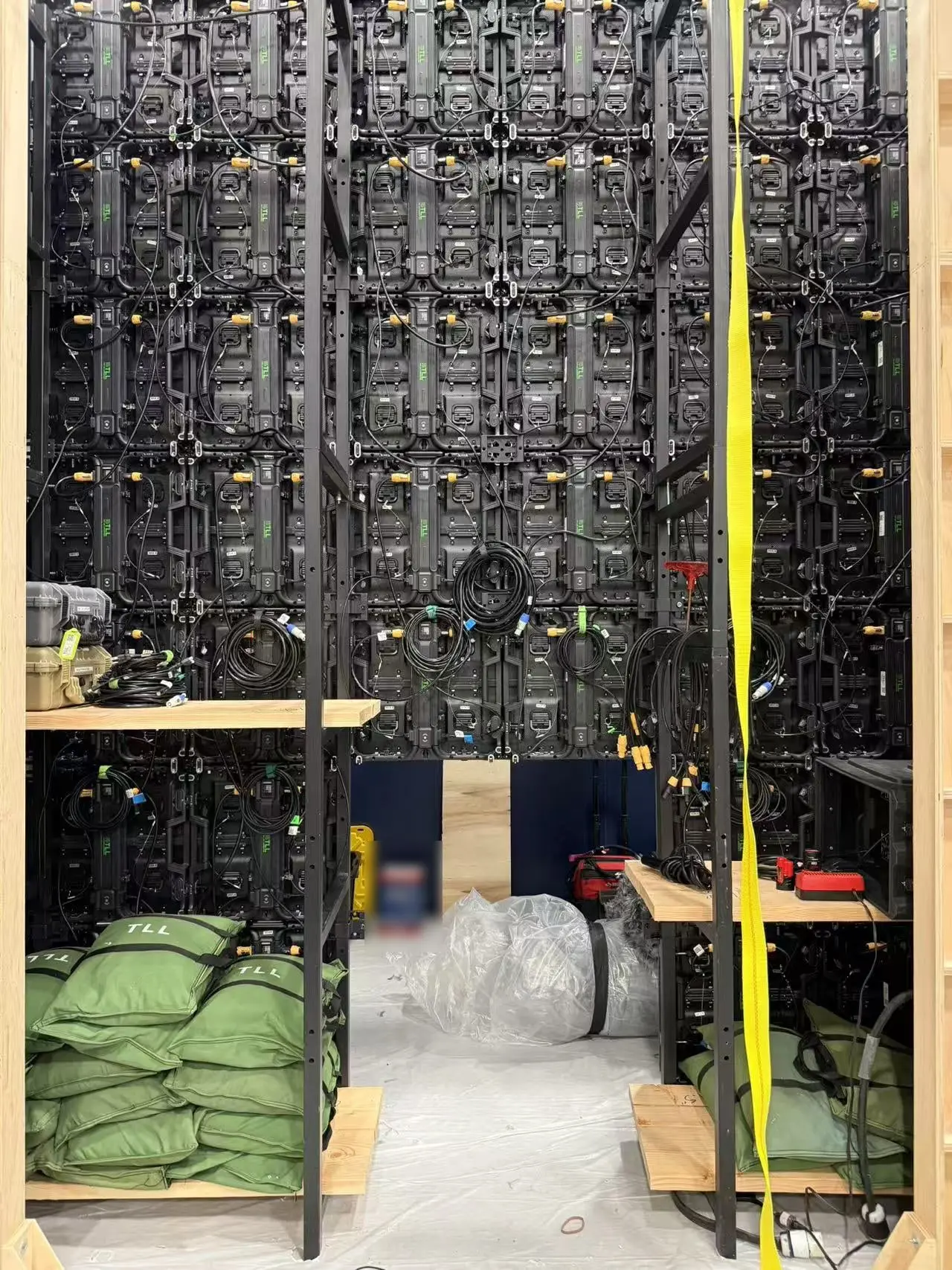
  7. Back of an LED wall inside a trade show booth: black steel uprights on wood base boards stacked with green sandbags, with shelves for cables and cases Photo 7
  8. Back of a long LED wall on a hotel ballroom stage, with a row of black steel frames standing behind the panels and weights at their feet Photo 8
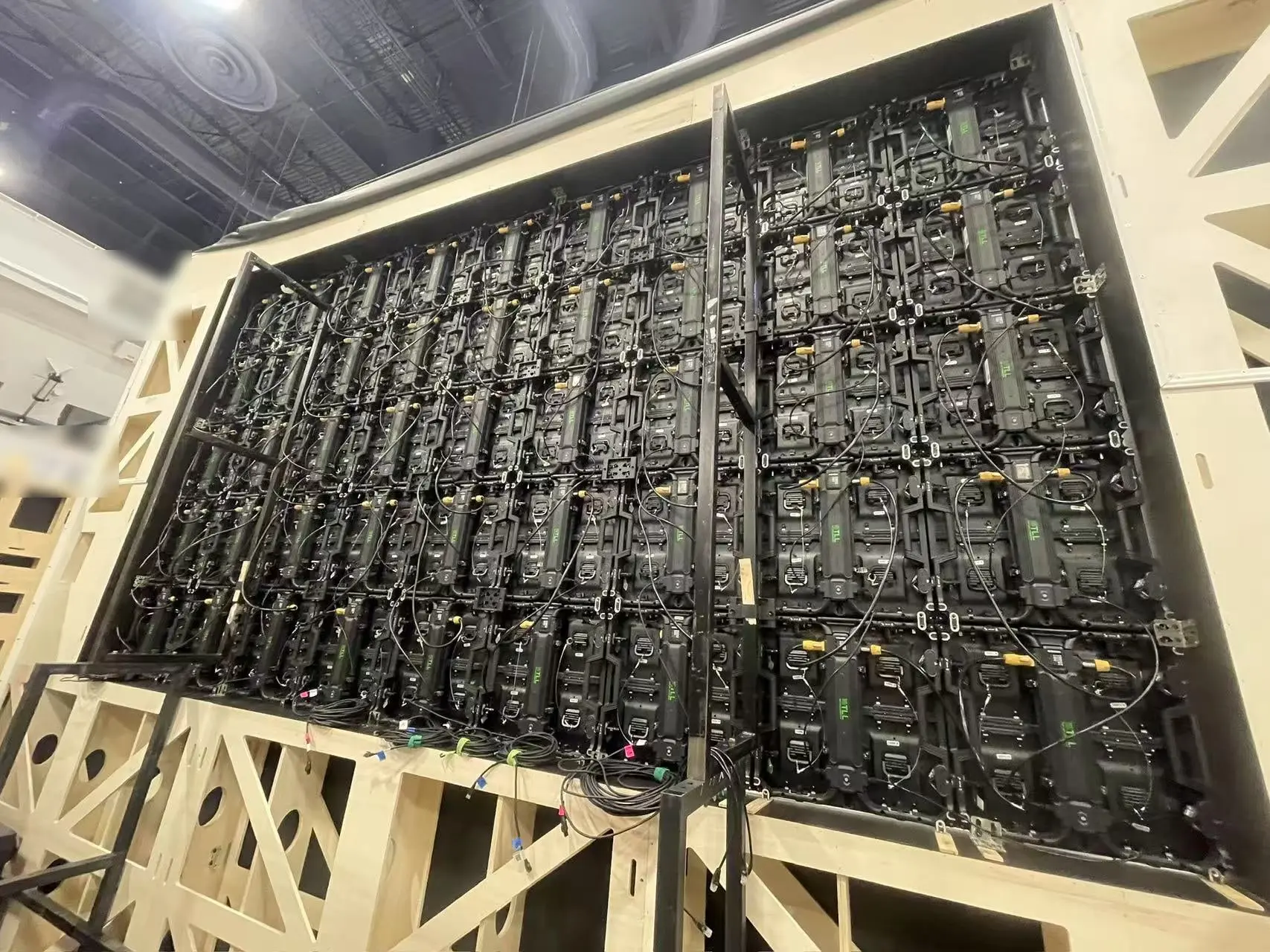
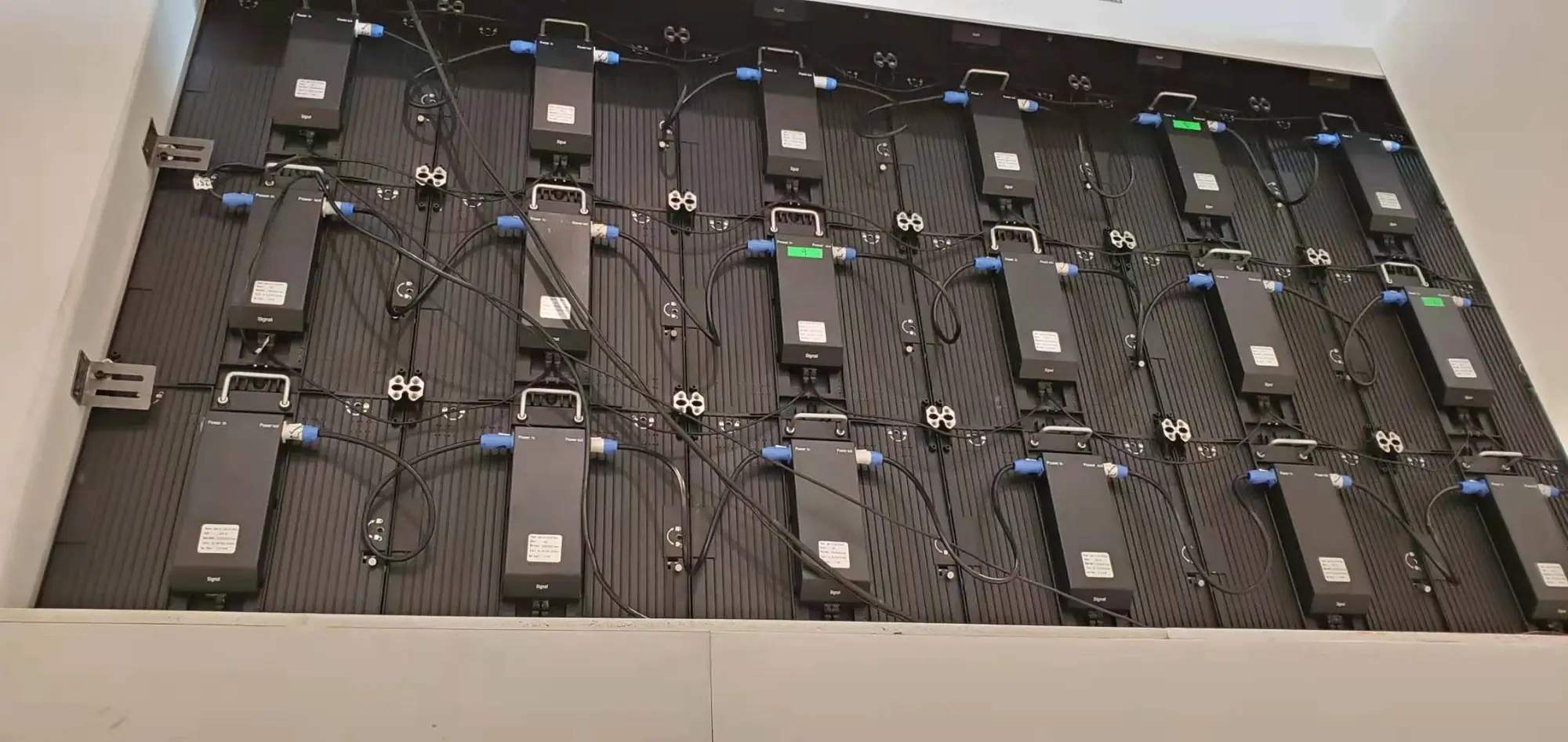
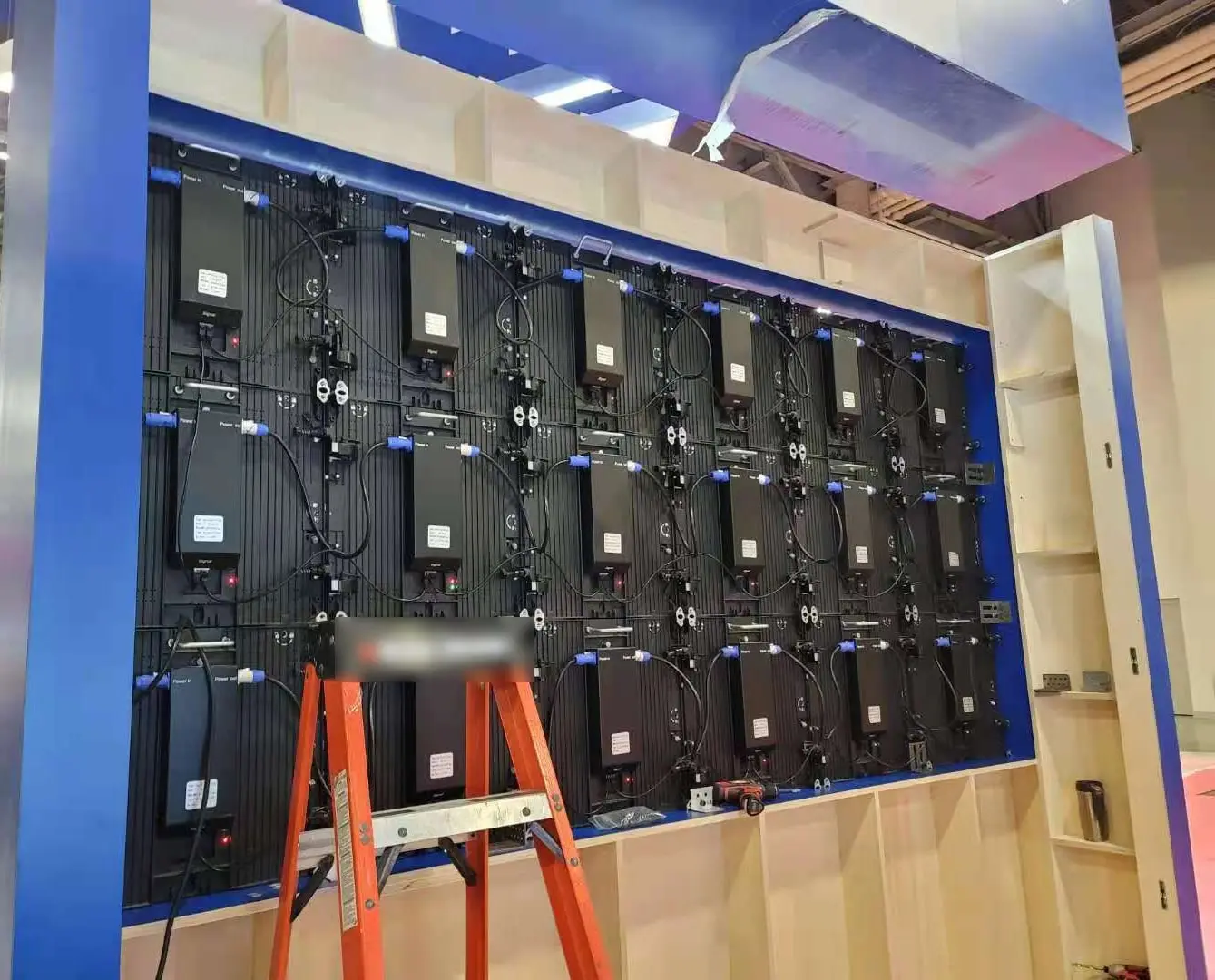
  9. Back of a large LED wall built into a wood booth structure: the panels sit on a plywood base, with black steel braces behind them and cables linking every panel Photo 9
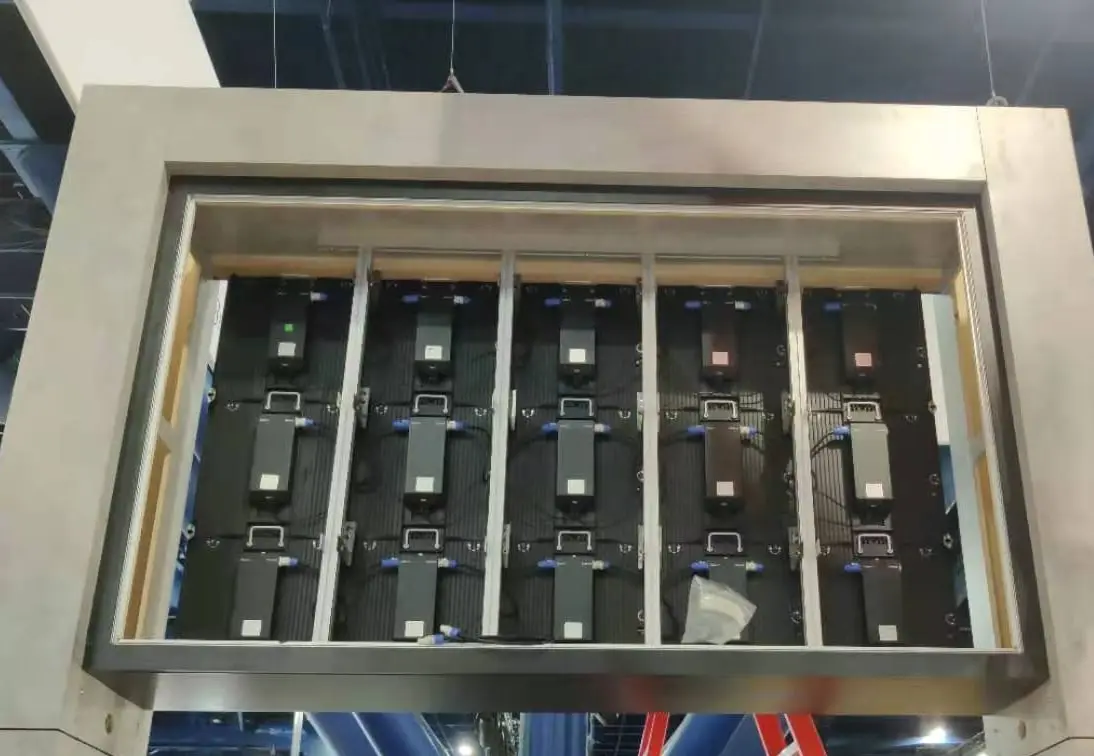
  10. Back of an LED wall set into a window opening high in a booth wall, with the panels fixed between metal channels inside a wood-lined frame Photo 10
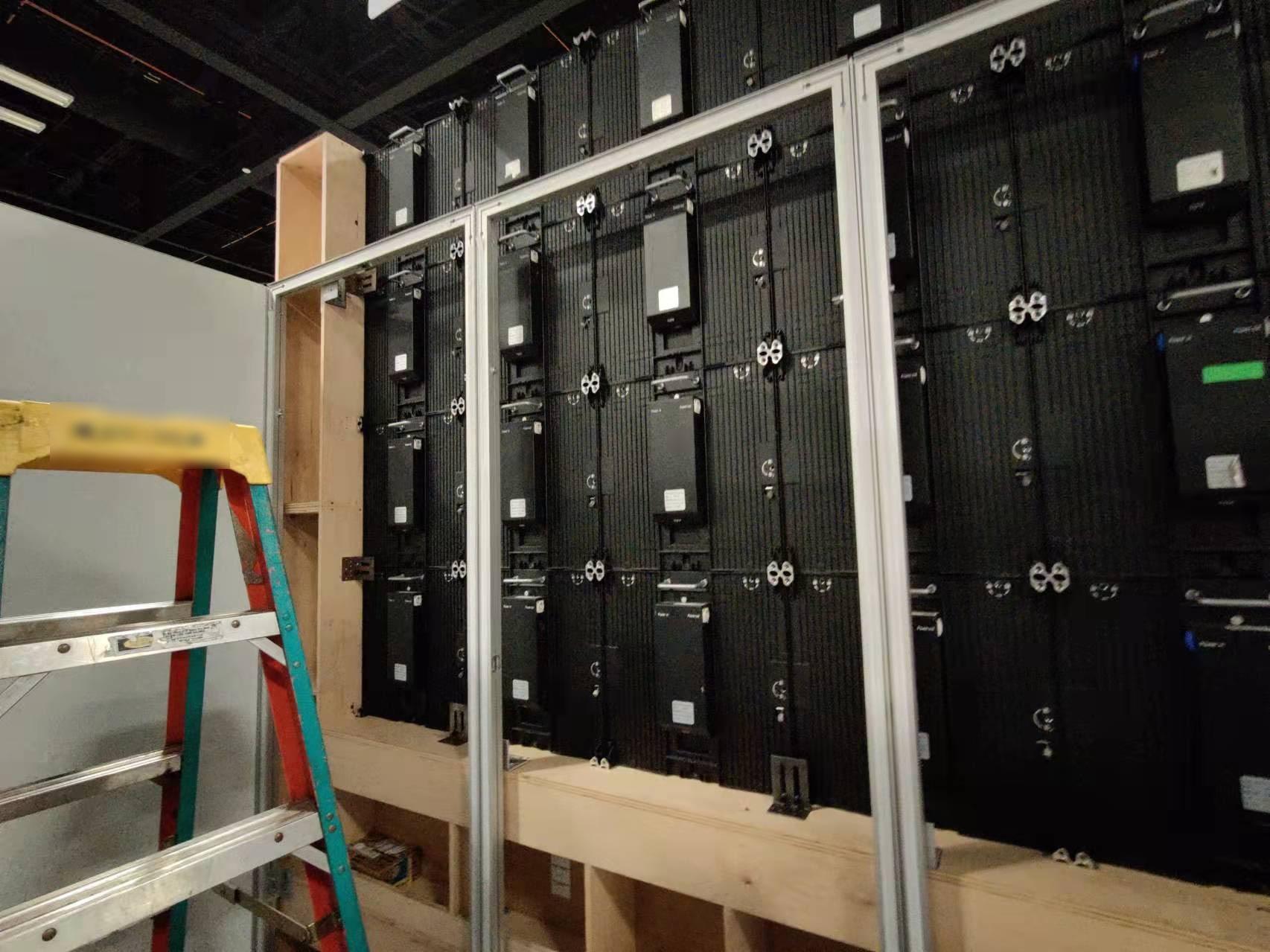
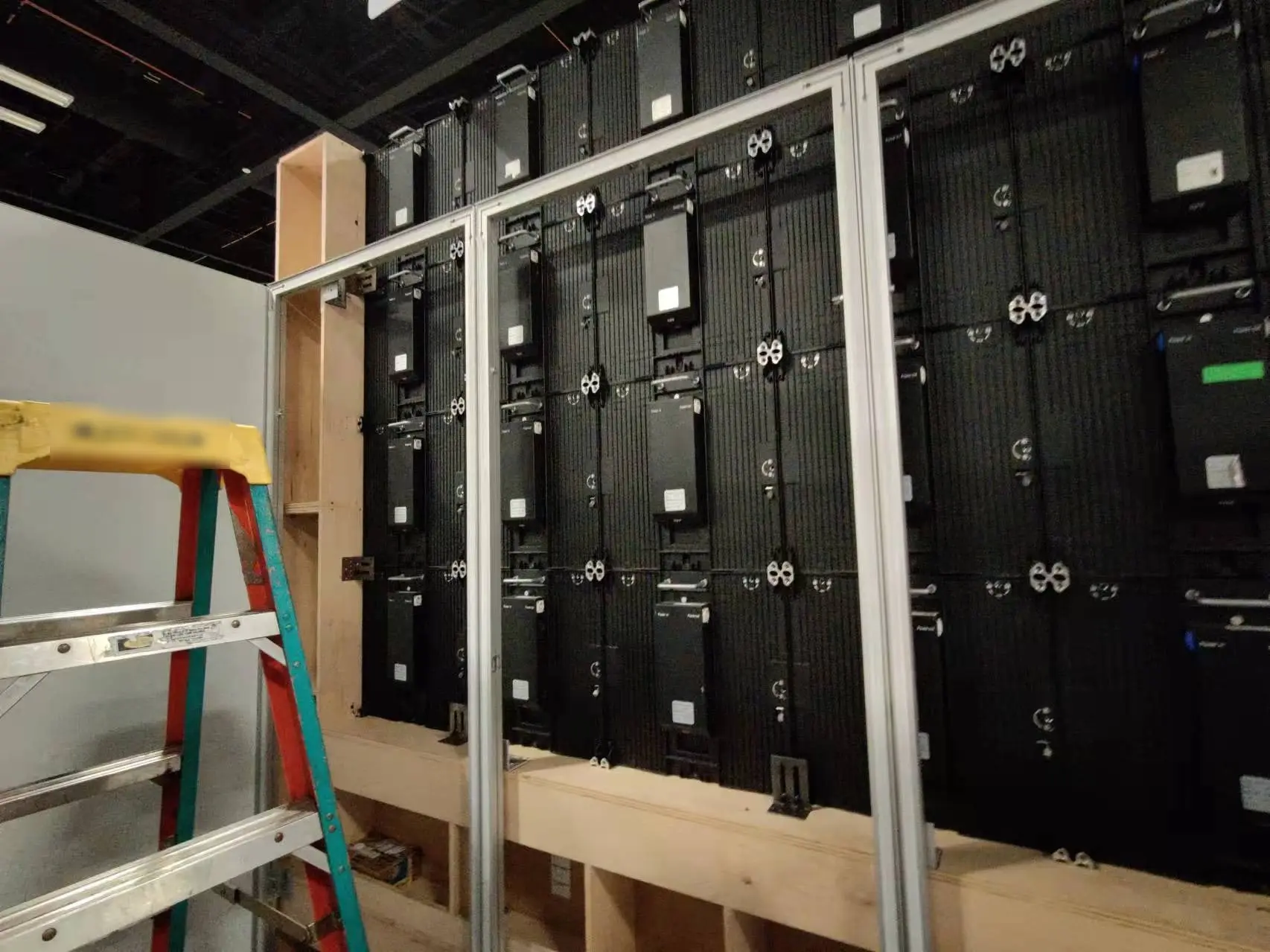
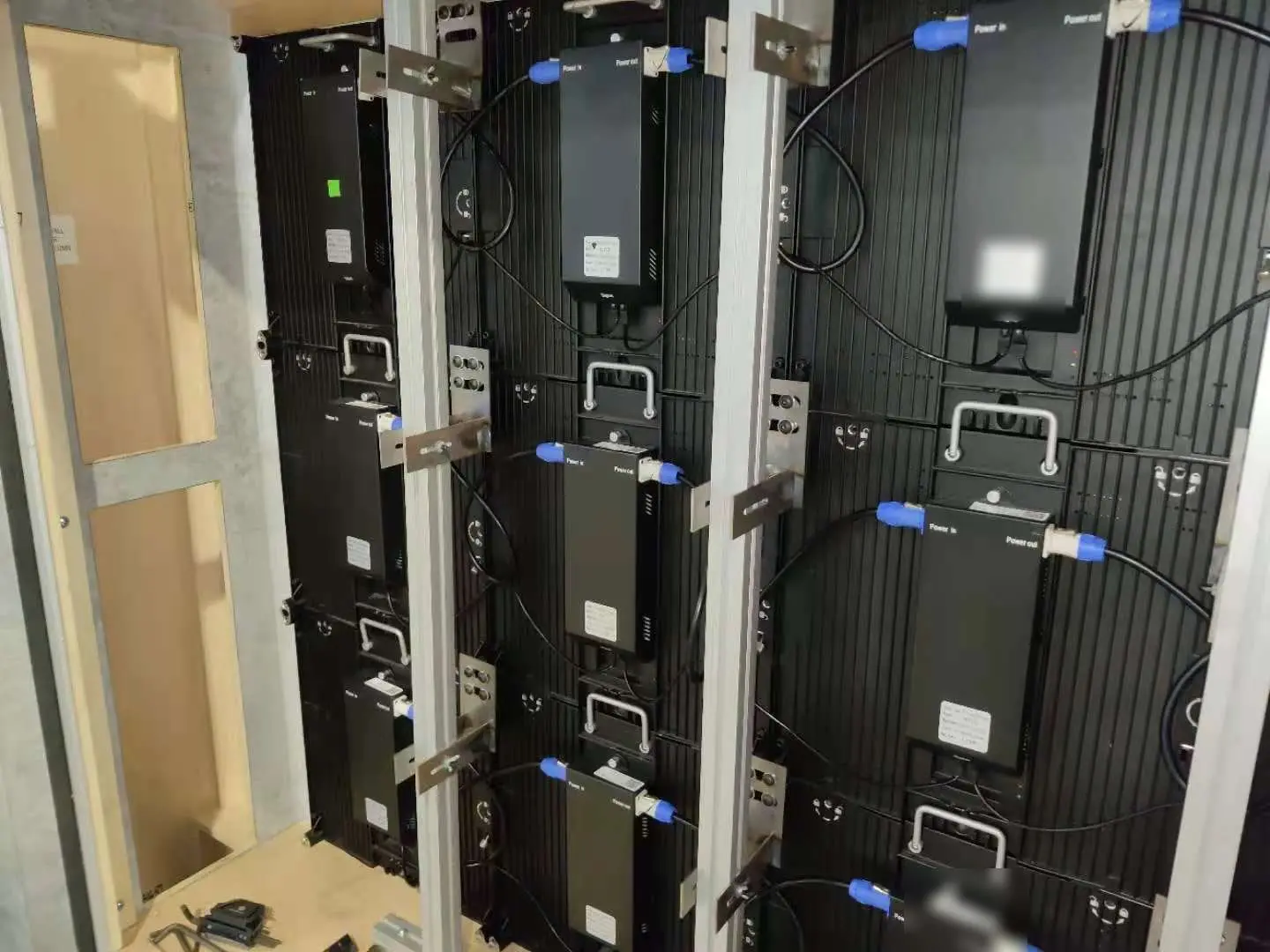
  11. Back of an LED wall built into a booth wall: the panels rest on a wood base, held in line by aluminum frames and small brackets Photo 11
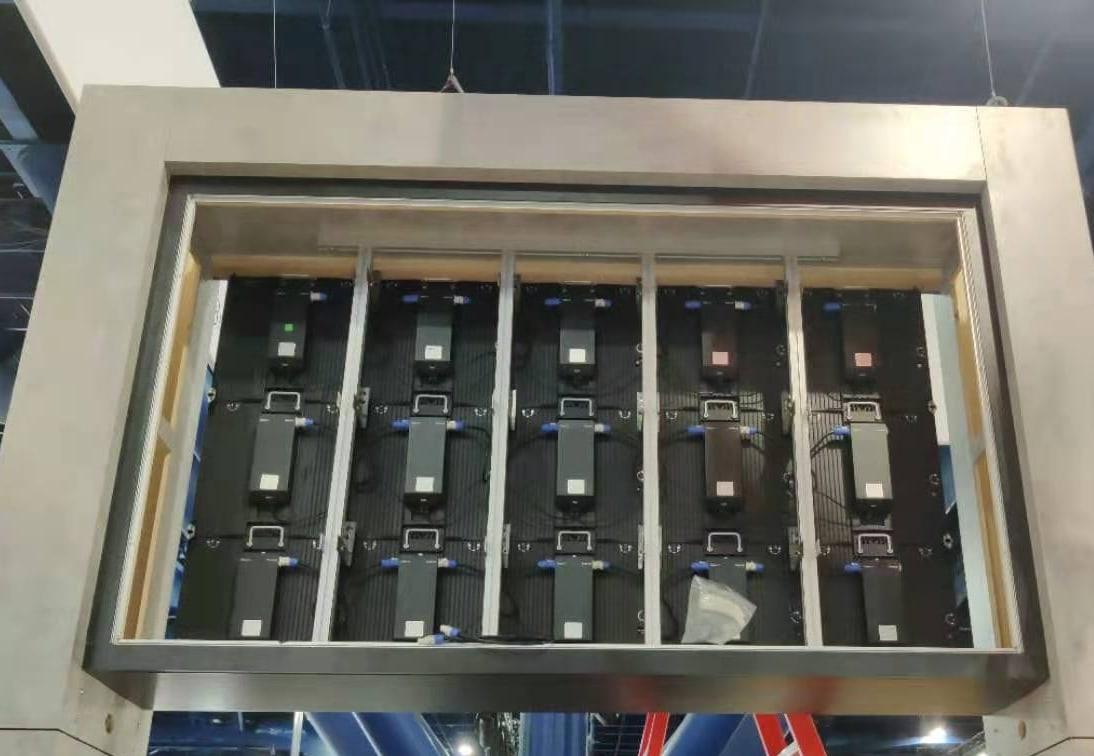
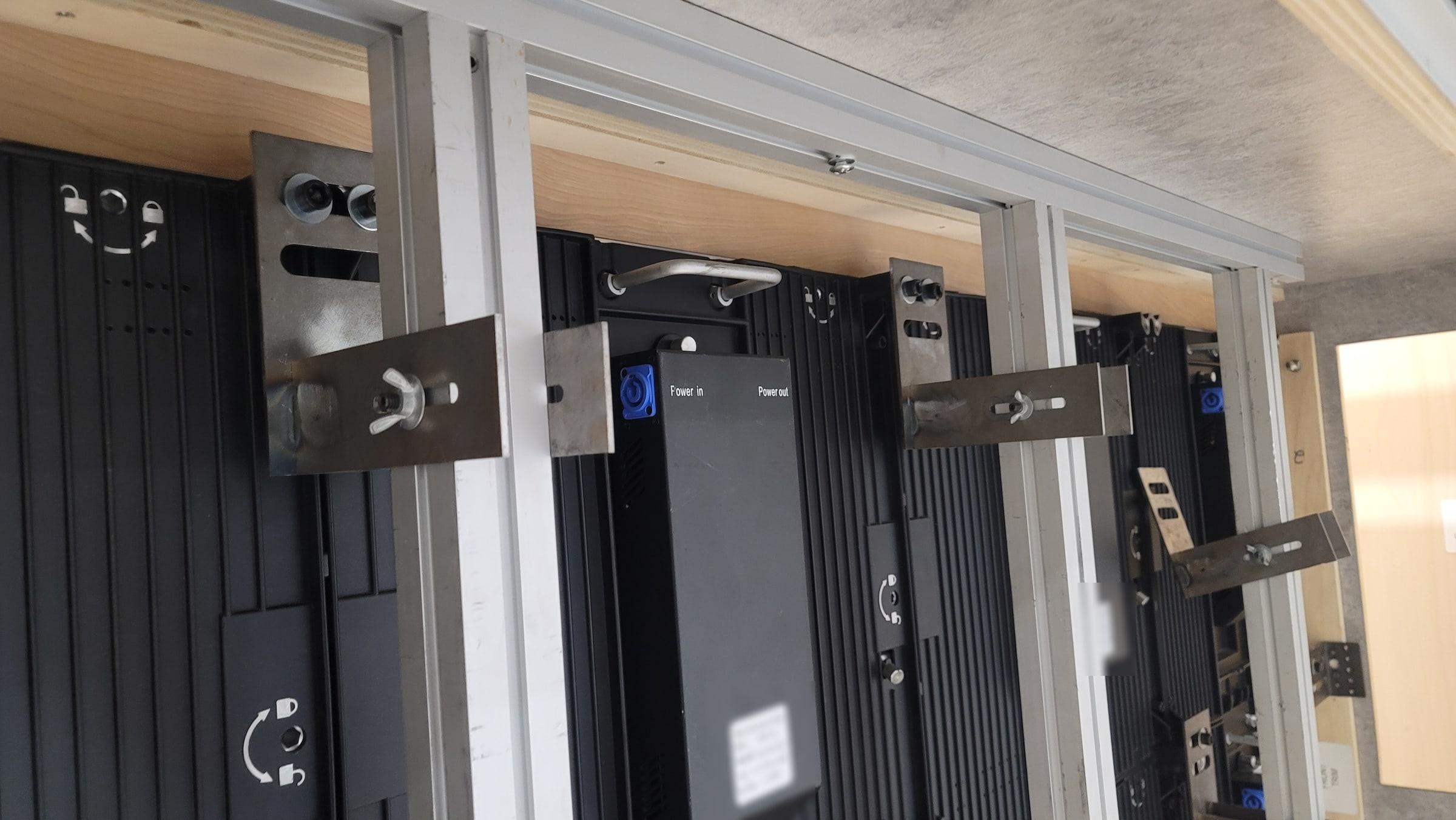
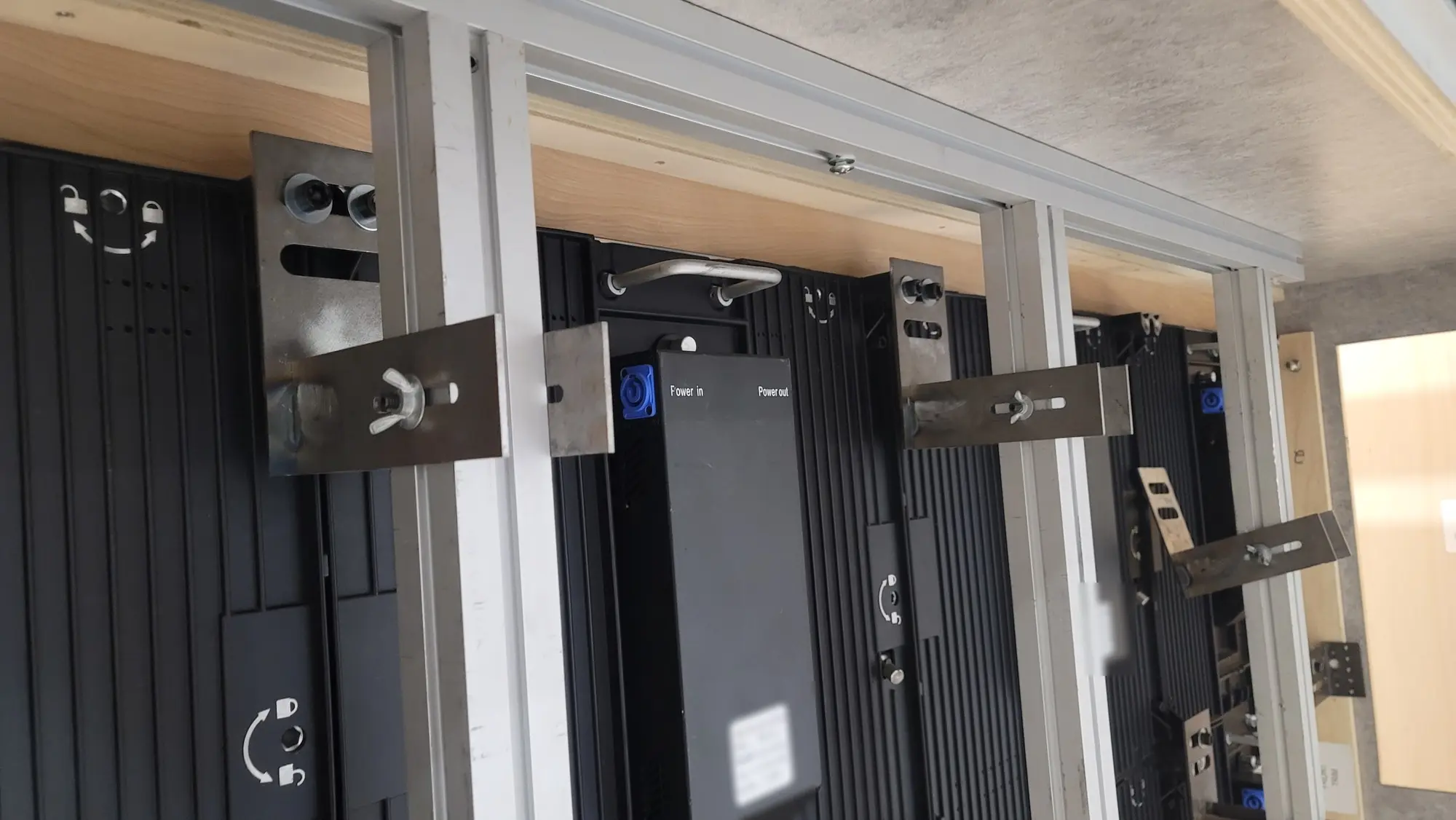
  12. Close view of an embedded LED wall: flat steel brackets with wing nuts clamp the panels to aluminum posts under a wood header in the booth wall Photo 12
  13. Inside a booth wall opening, flat steel brackets bolt the LED panels to aluminum posts, so the booth structure carries the wall Photo 13
  14. Back of an LED wall set into an opening in a white booth wall, resting on the bottom ledge, with metal brackets fixing its side to the wall Photo 14
  15. Back of an LED wall set into an opening in a booth wall, resting on a wood ledge, with metal brackets fixing it at the sides Photo 15
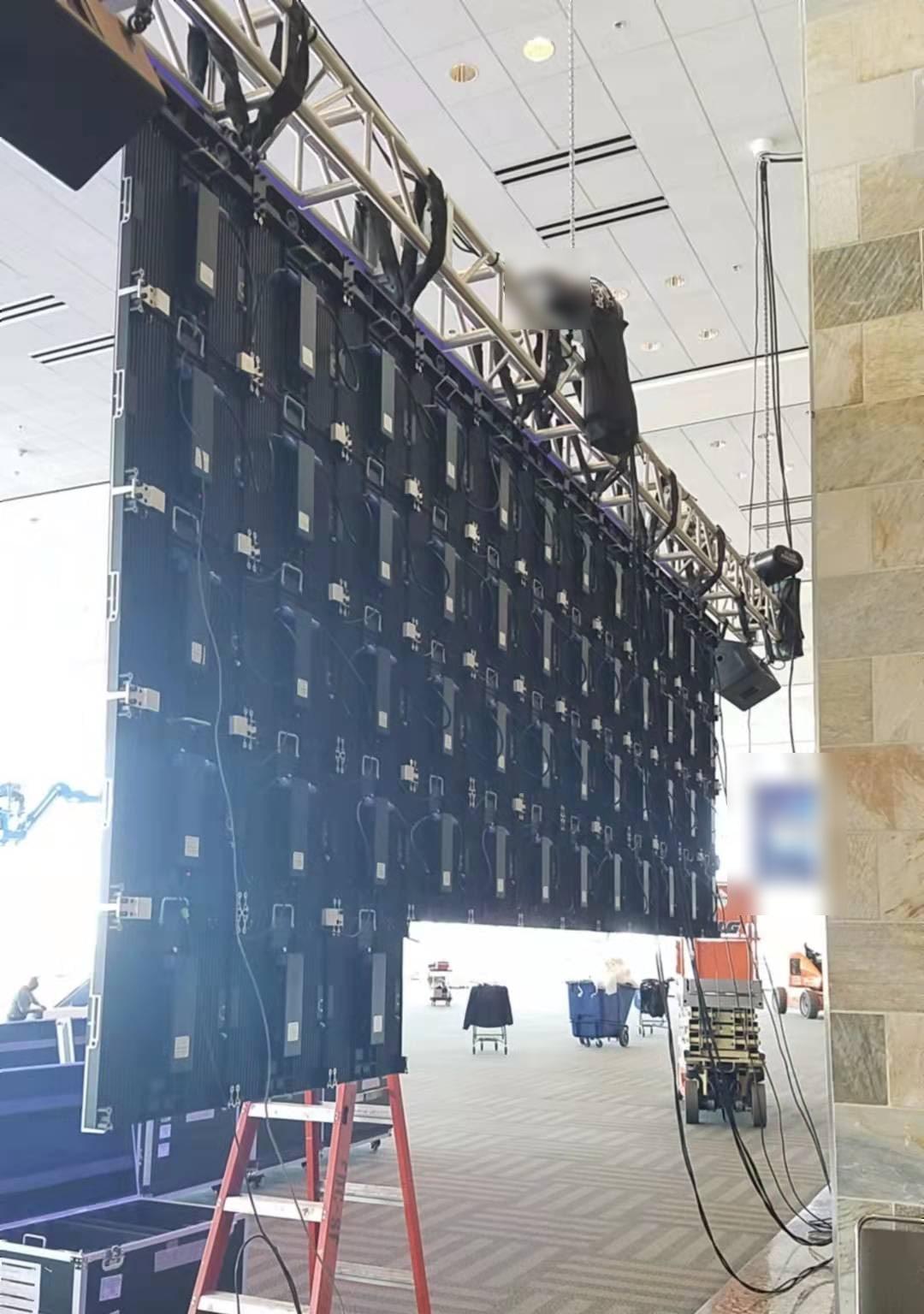
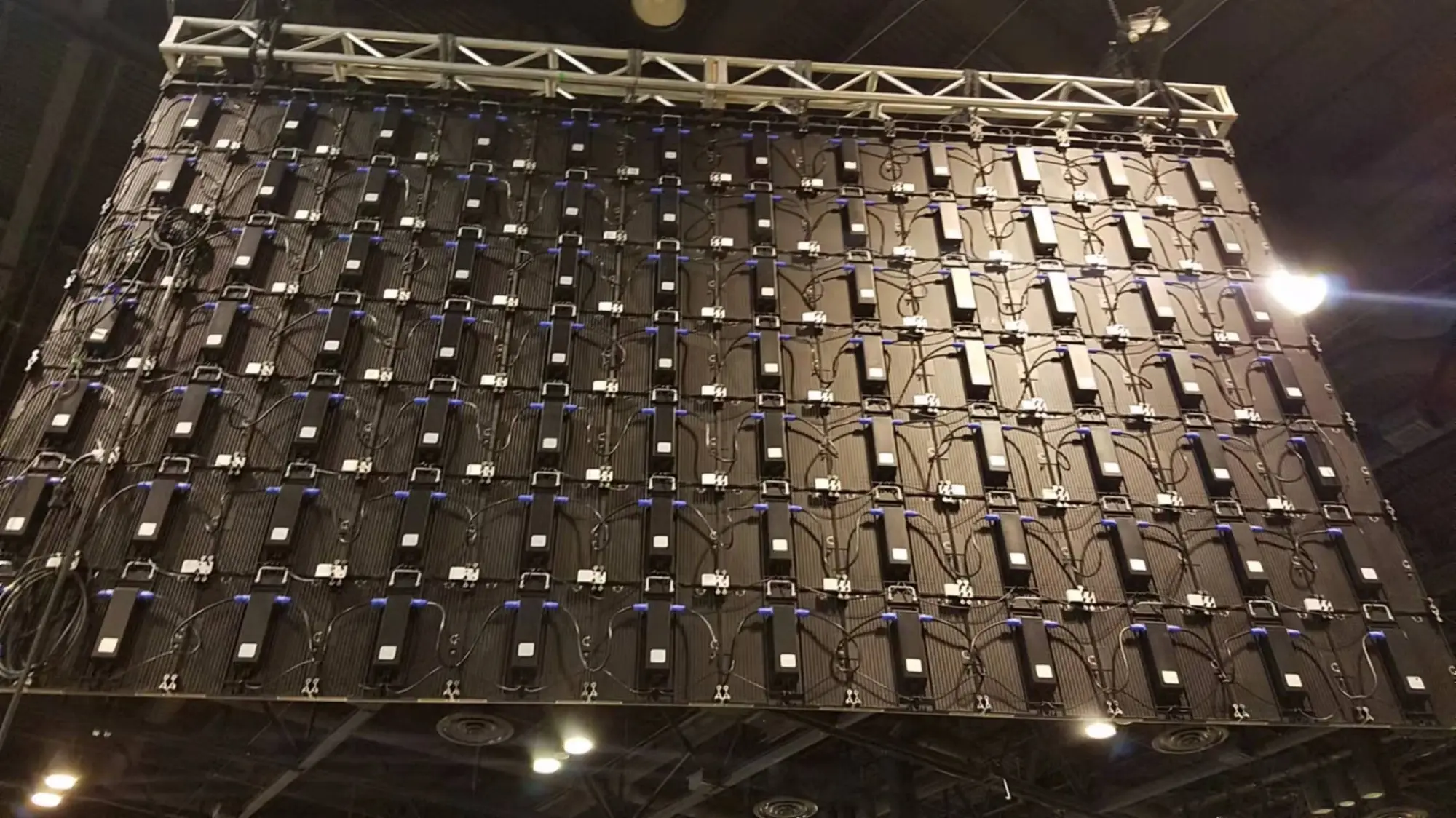
  16. Back of an LED wall hung high from a silver truss: the top row of panels is fixed to the truss and the rest of the wall hangs below it Photo 16
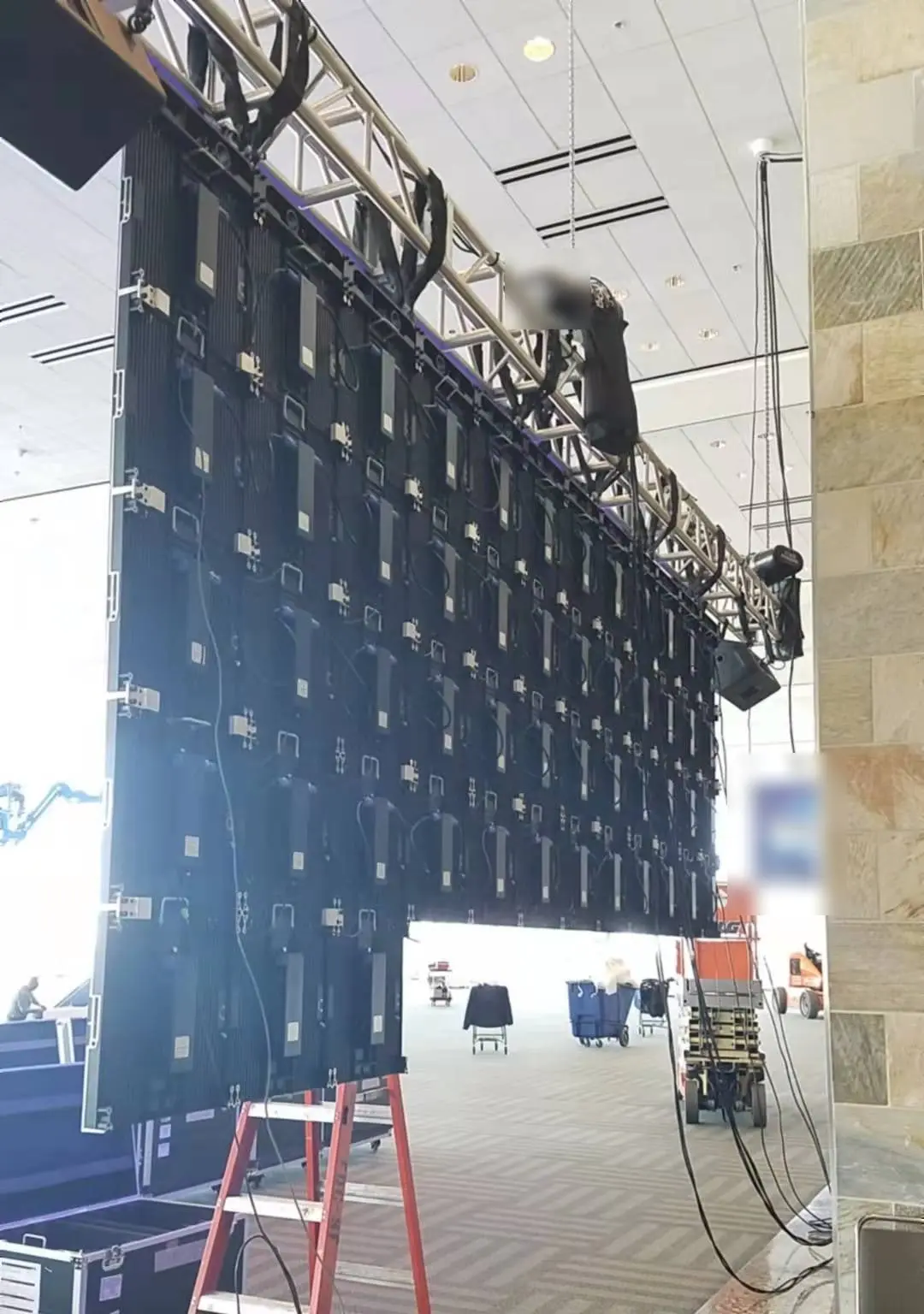
  17. Back of a large LED wall hung from a silver truss on chain hoists, with power and data cables on every panel, during setup in a convention lobby Photo 17
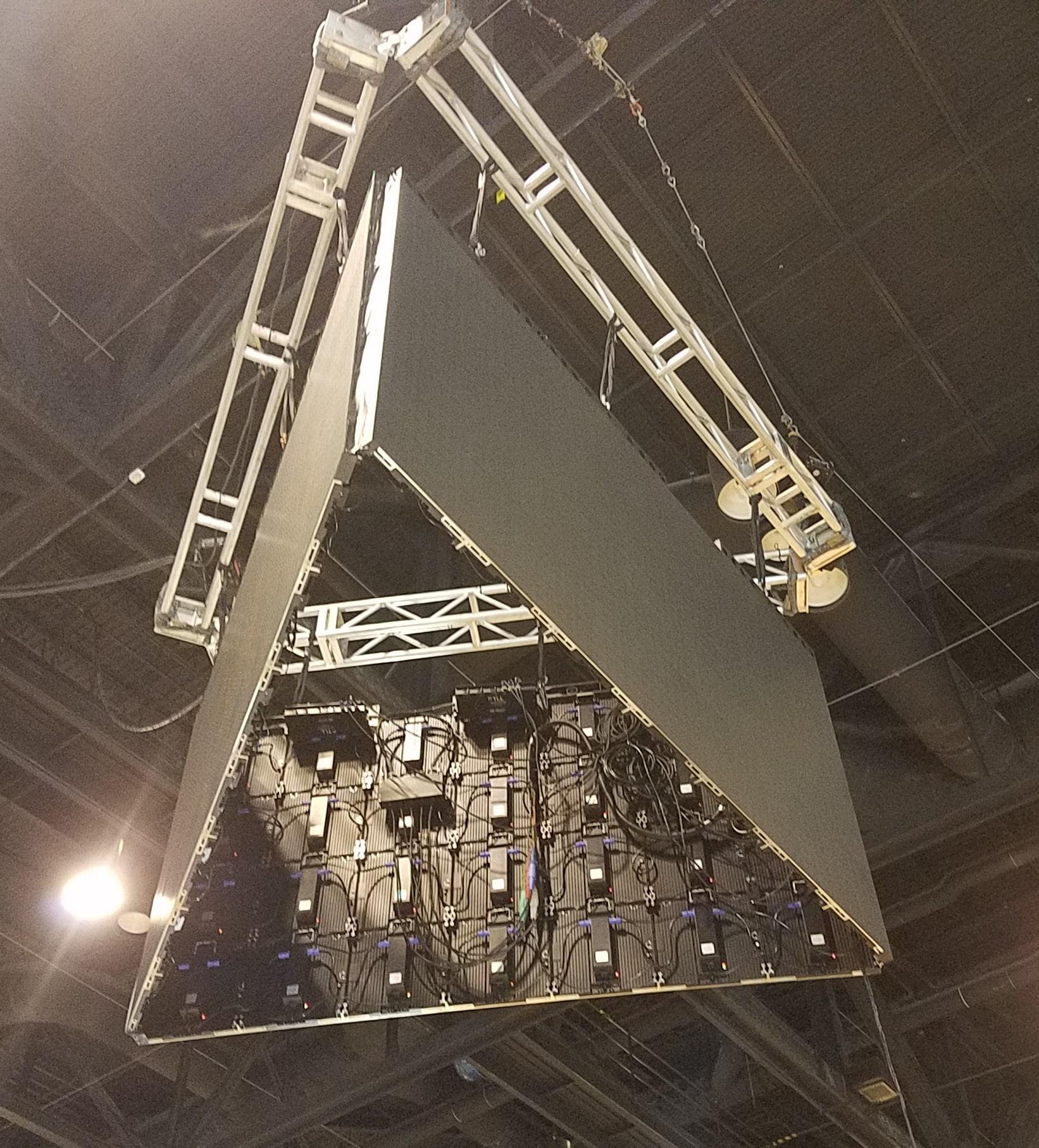
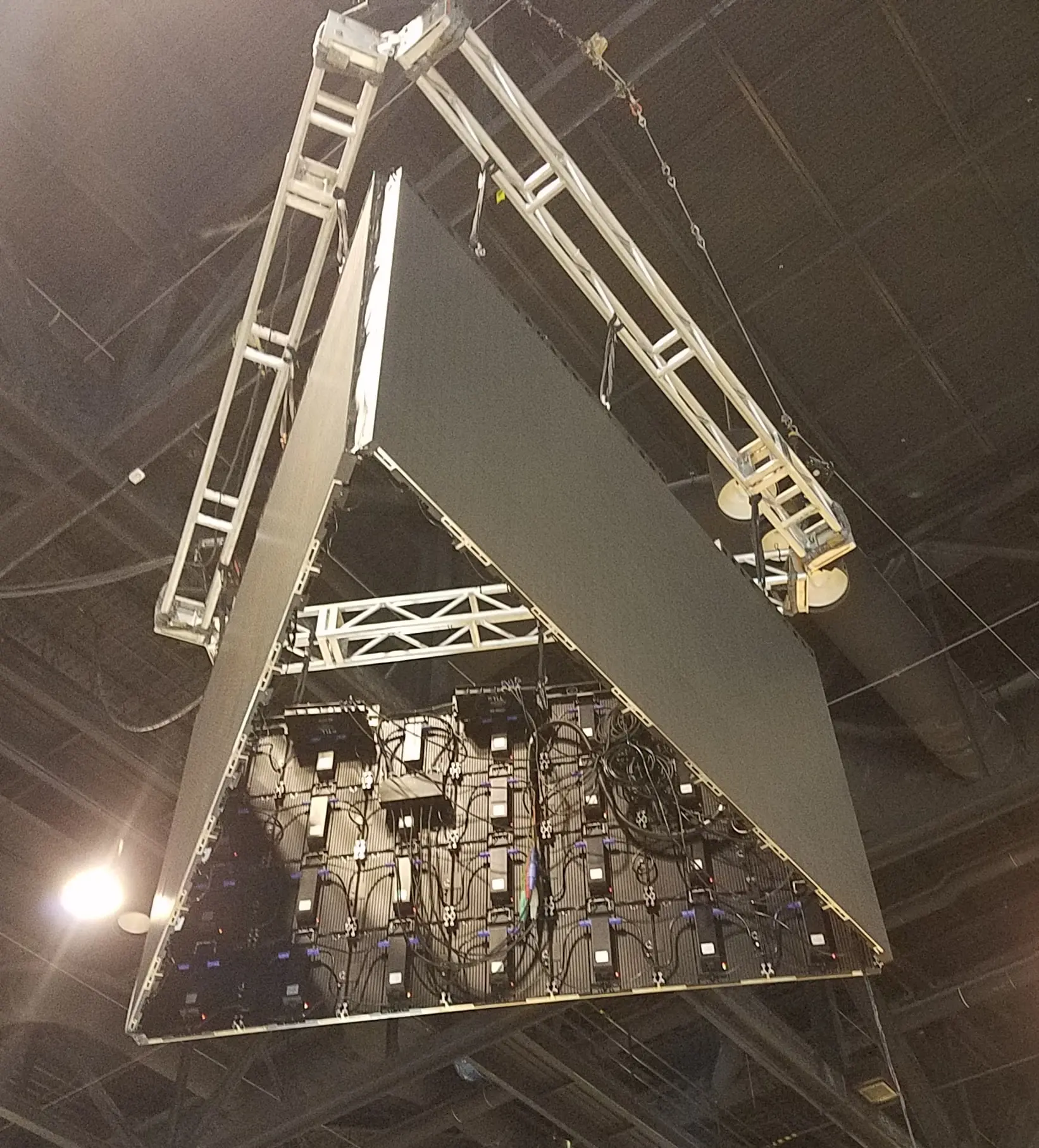
  18. A triangle-shaped LED display hung from an aluminum truss frame, seen from below, with the backs of the panels and their cables inside Photo 18
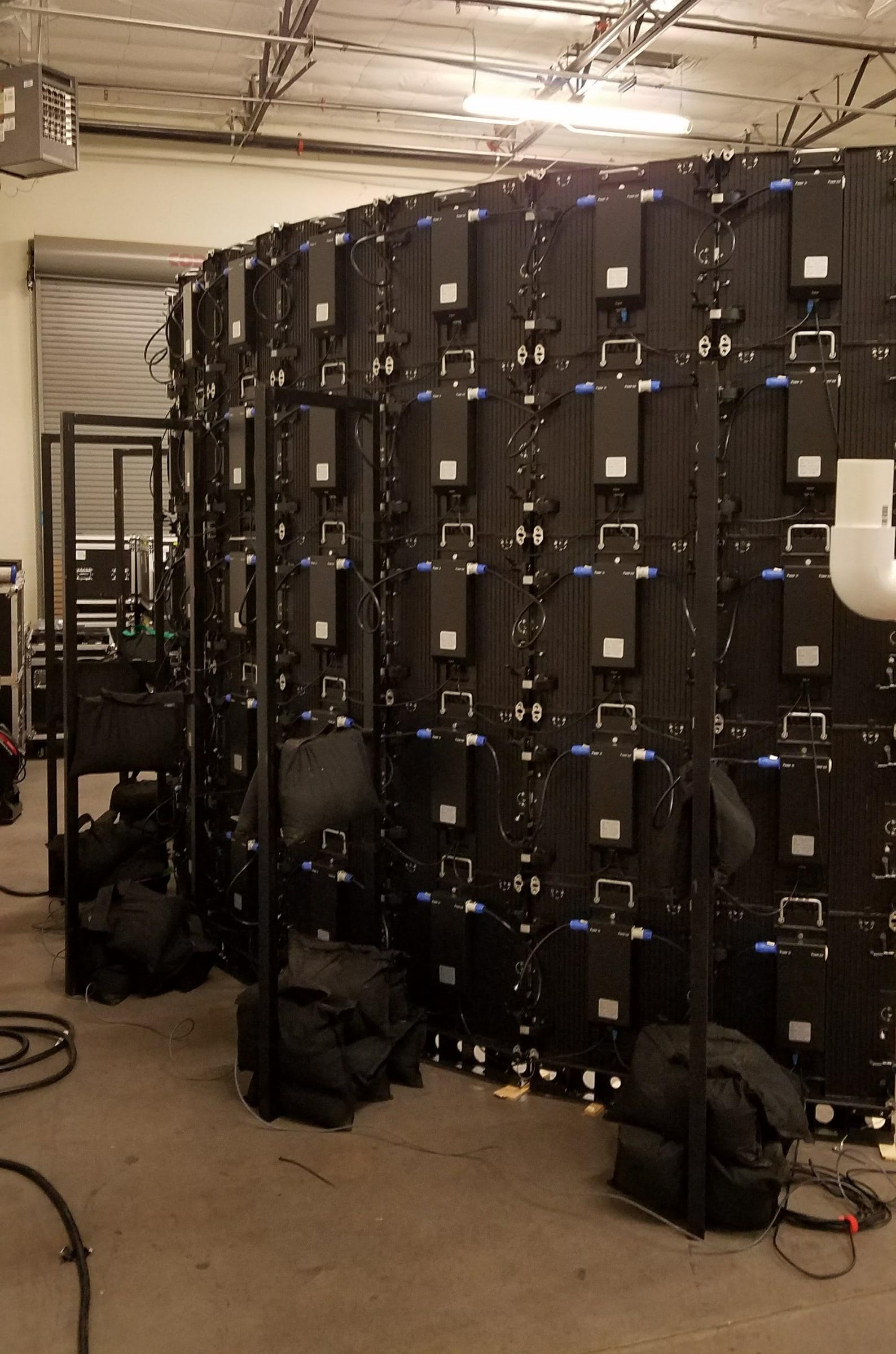
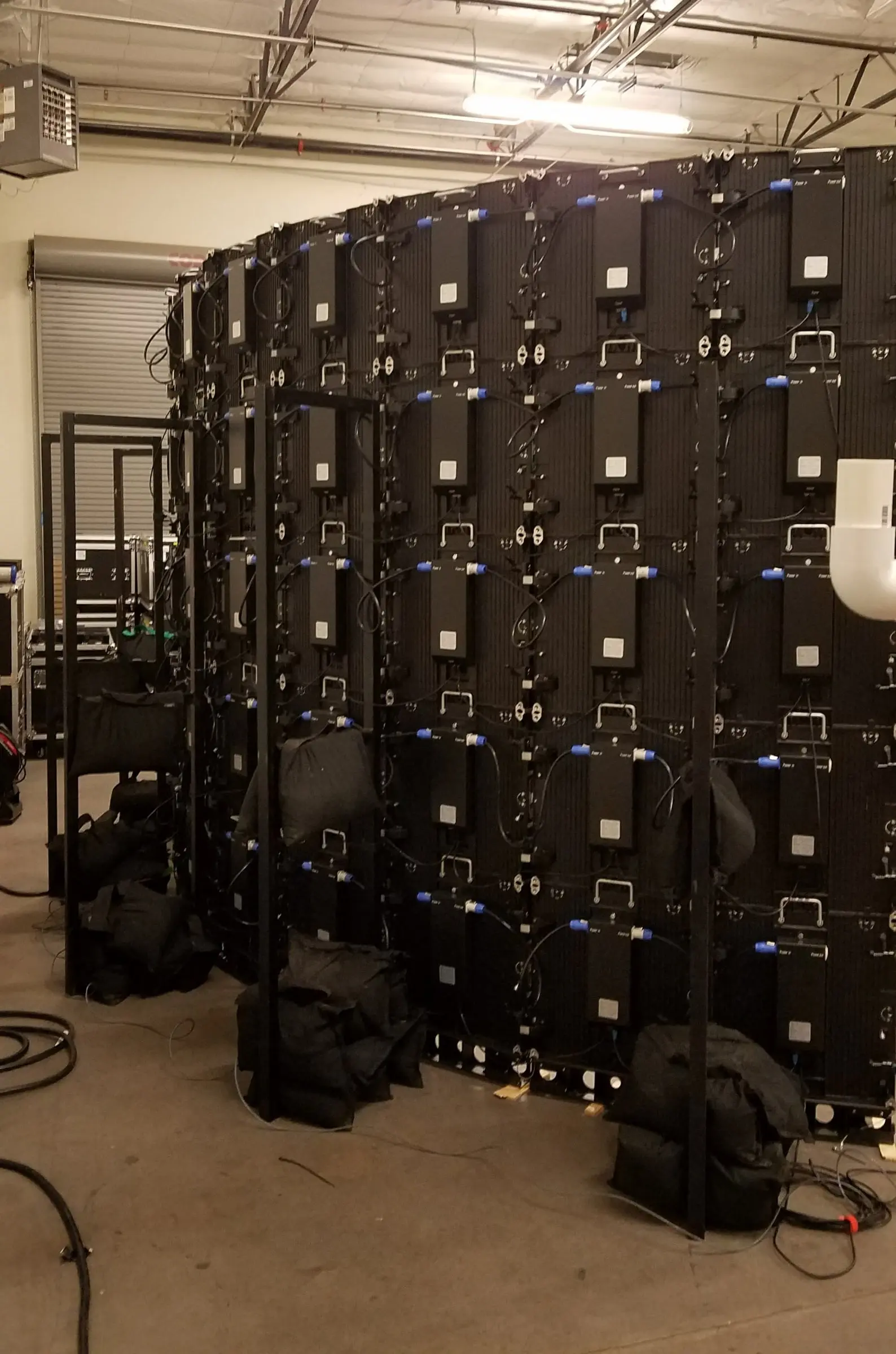
  19. Back of a curved LED wall in a warehouse: black steel frames stand behind the panels, with black sandbags at their feet to hold the curve steady Photo 19
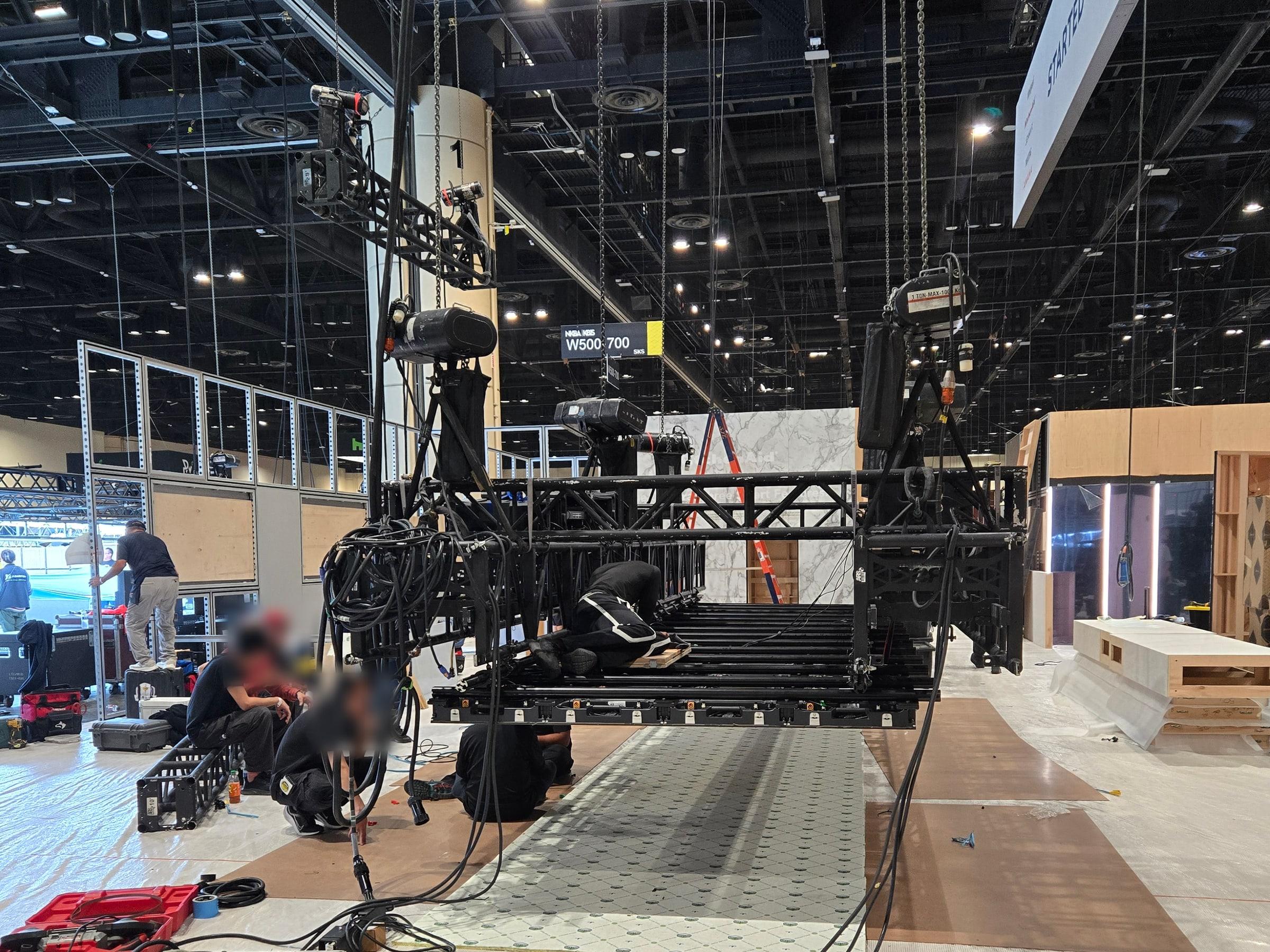
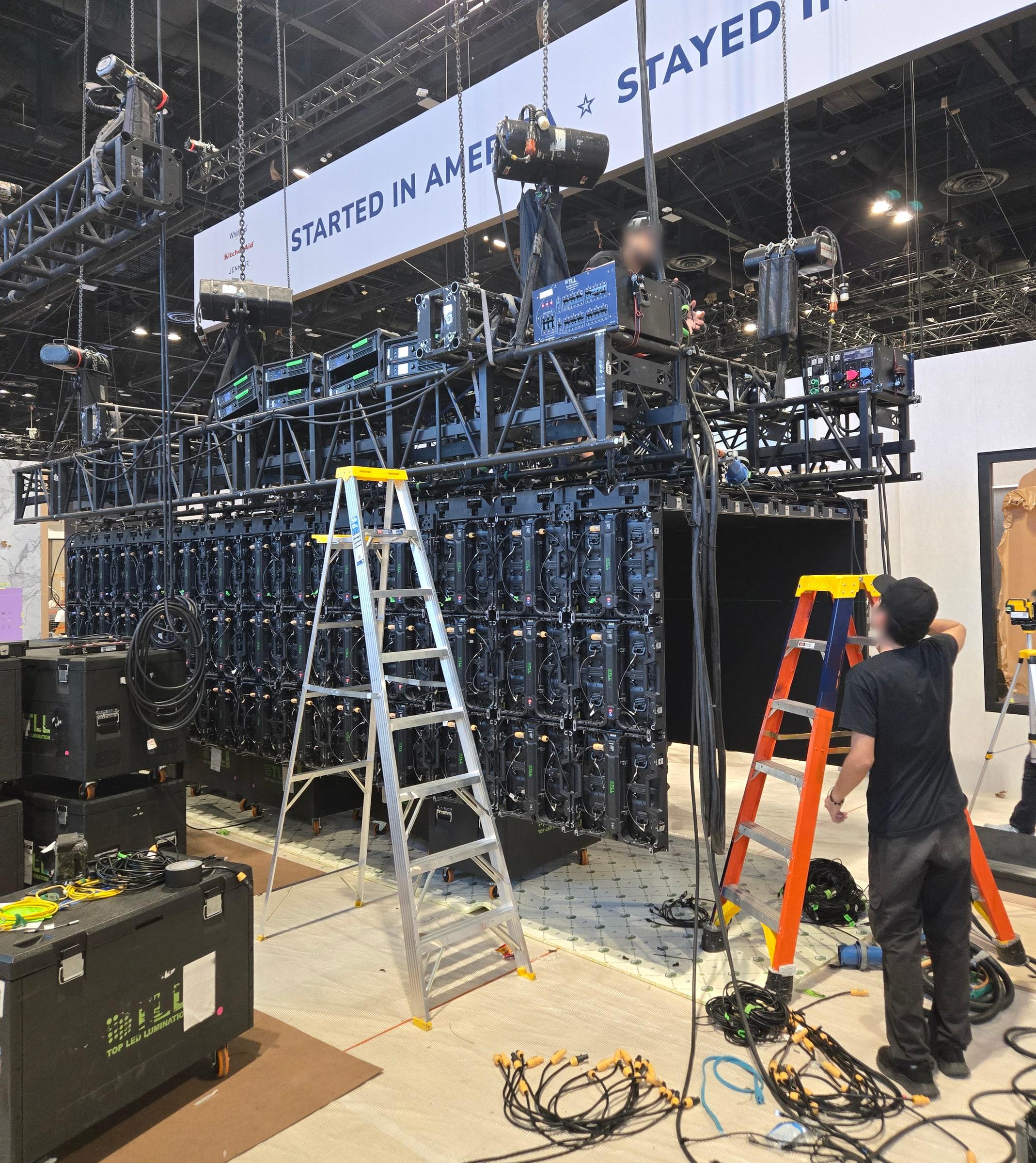
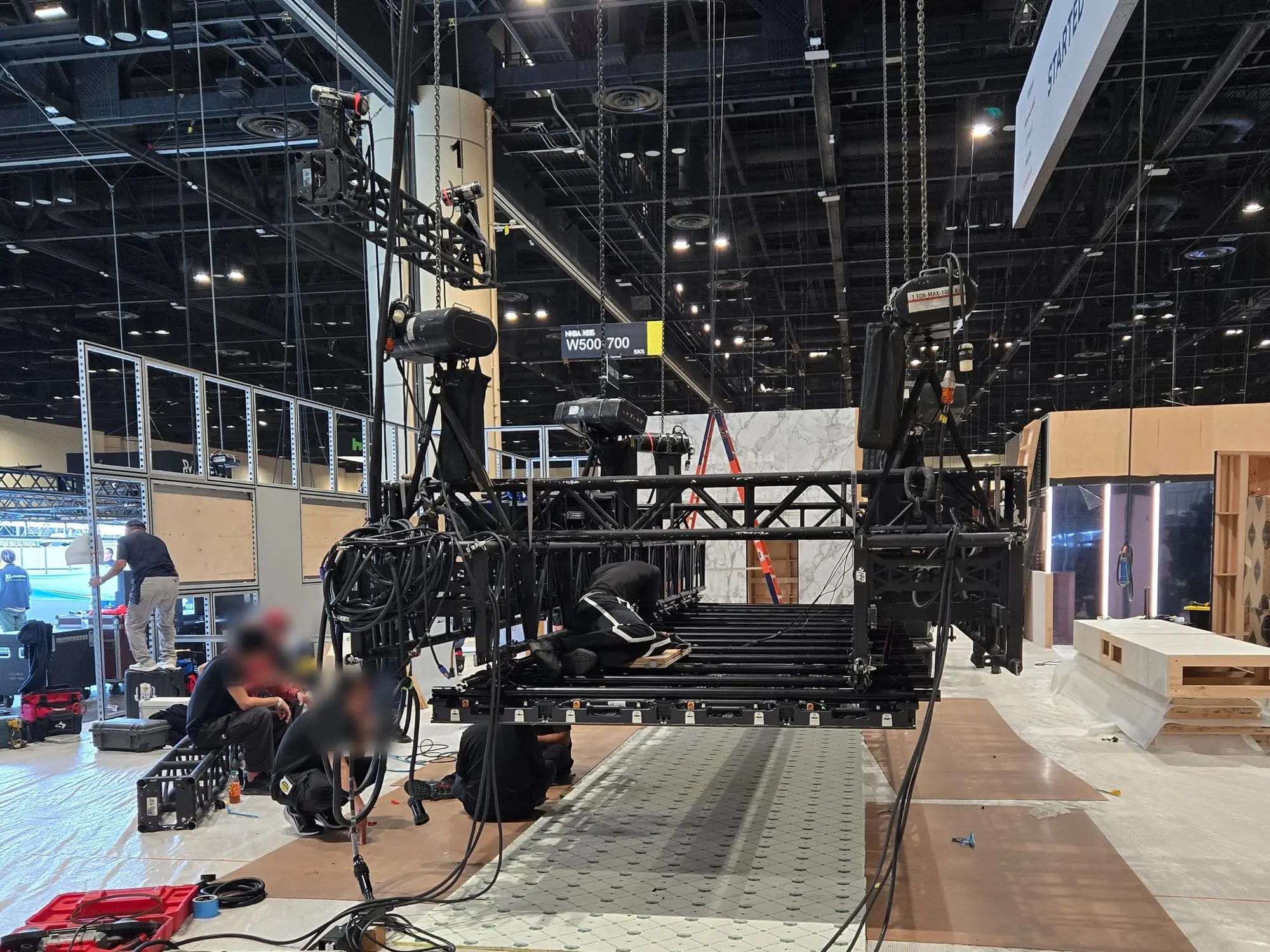
  20. Crew builds the truss frame on chain motors for the KitchenAid walk-through tunnel in the Whirlpool booth at KBIS 2026 Photo 20
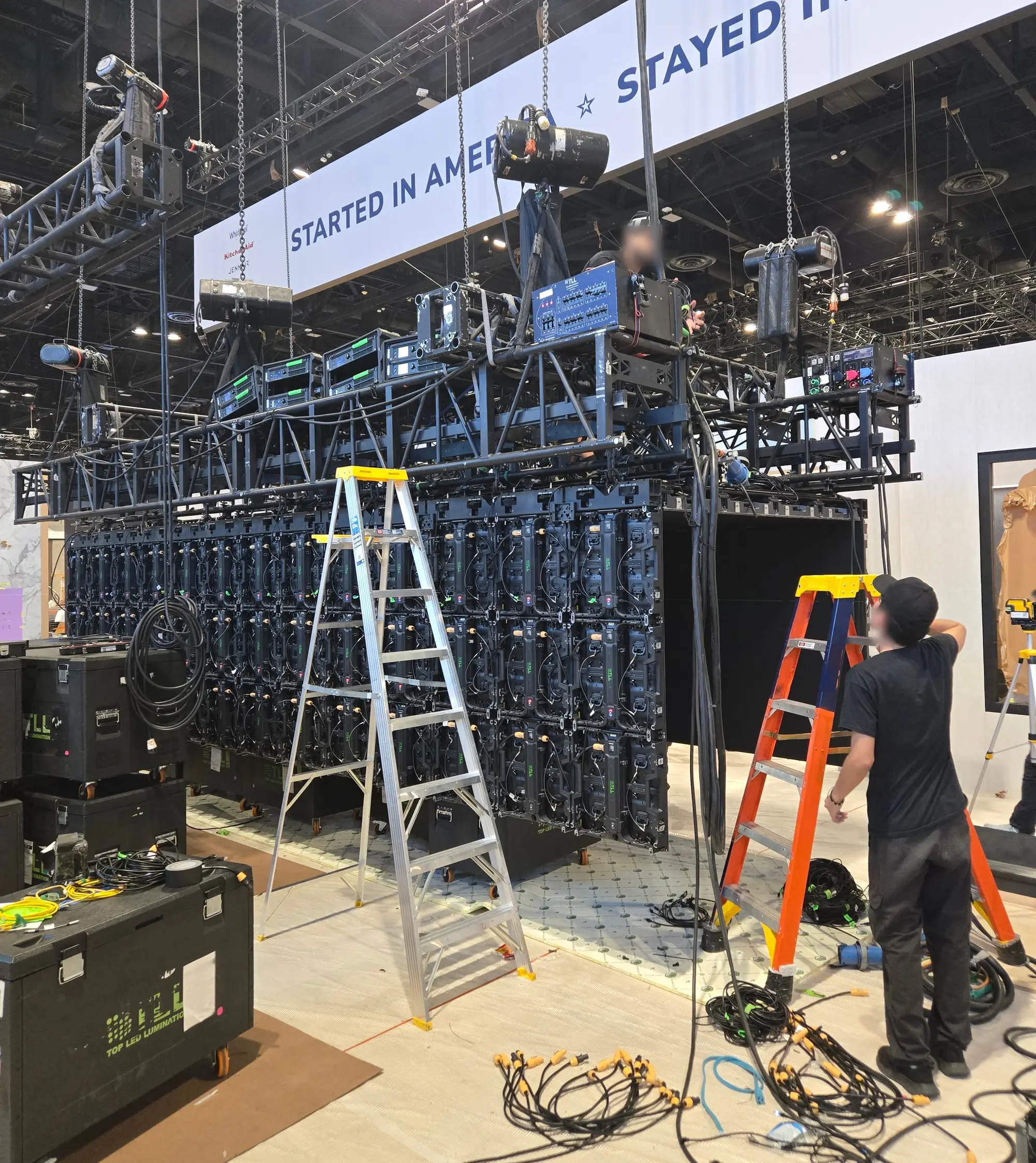
  21. Crew on the truss hangs LED panels for the KitchenAid walk-through tunnel in the Whirlpool booth at KBIS 2026, with a ladder on each side Photo 21

Click or tap any photo to see it bigger. On a call with us? Just say the photo number.

What holds an LED wall up?

Every LED wall needs a structure behind it. These photos show the back of our walls, so you can see how each kind is built before your show.

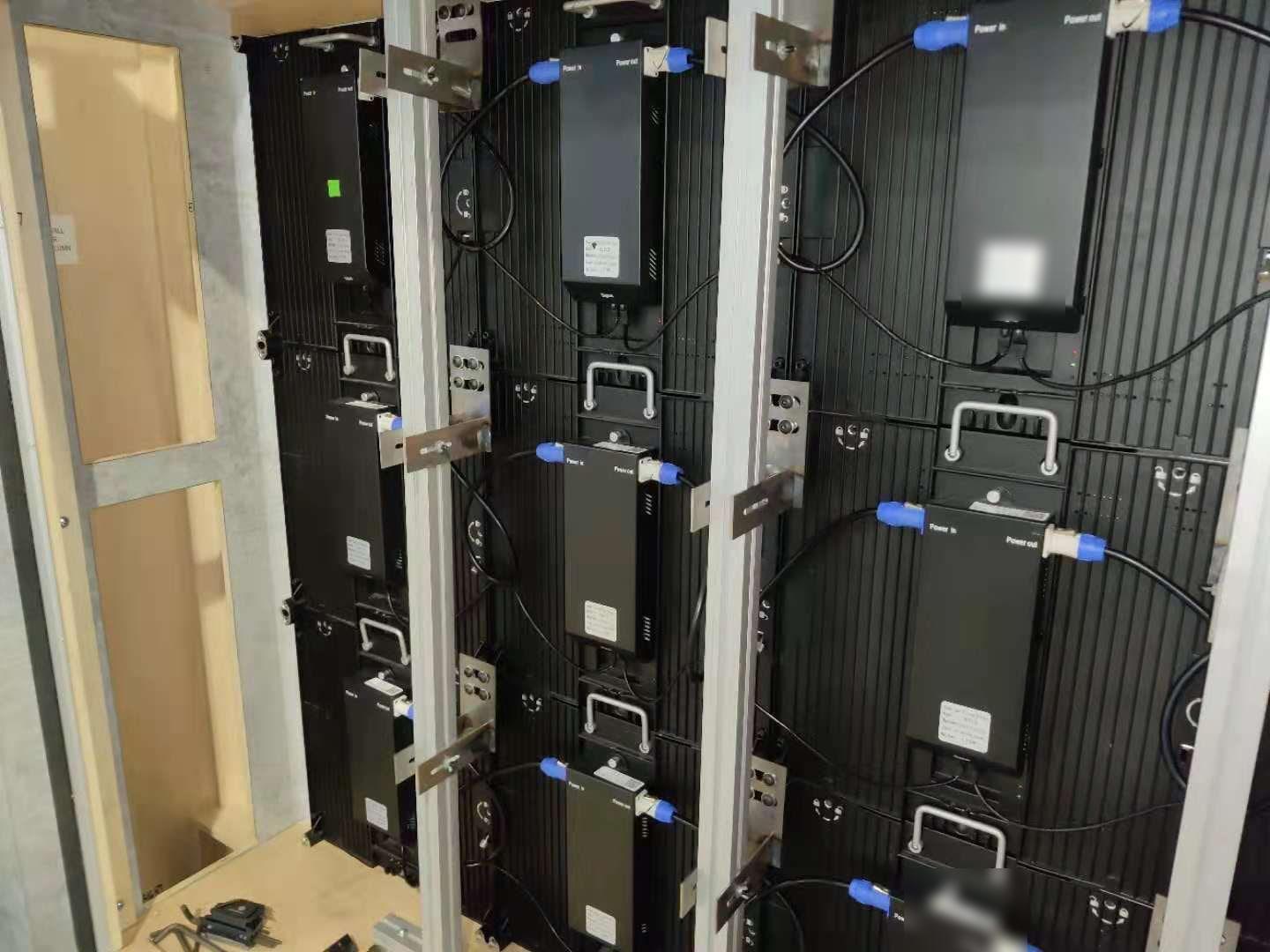
A ground-supported wall stands on its own steel frames on the floor. Upright frames sit behind the panels, braces tie them back, and sandbags or weights on the base keep the wall steady. Nothing hangs from the ceiling, so the venue does not need rigging points.

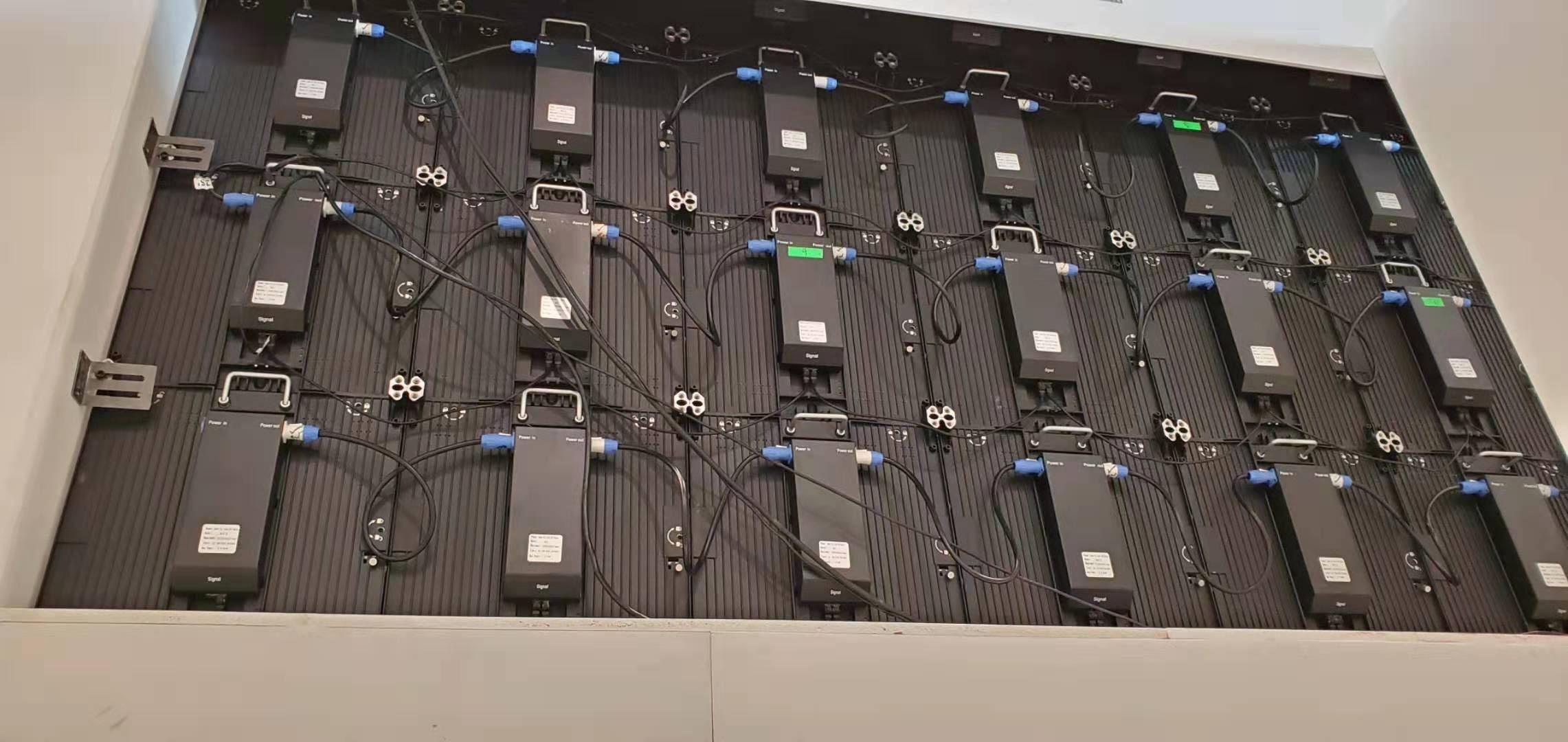
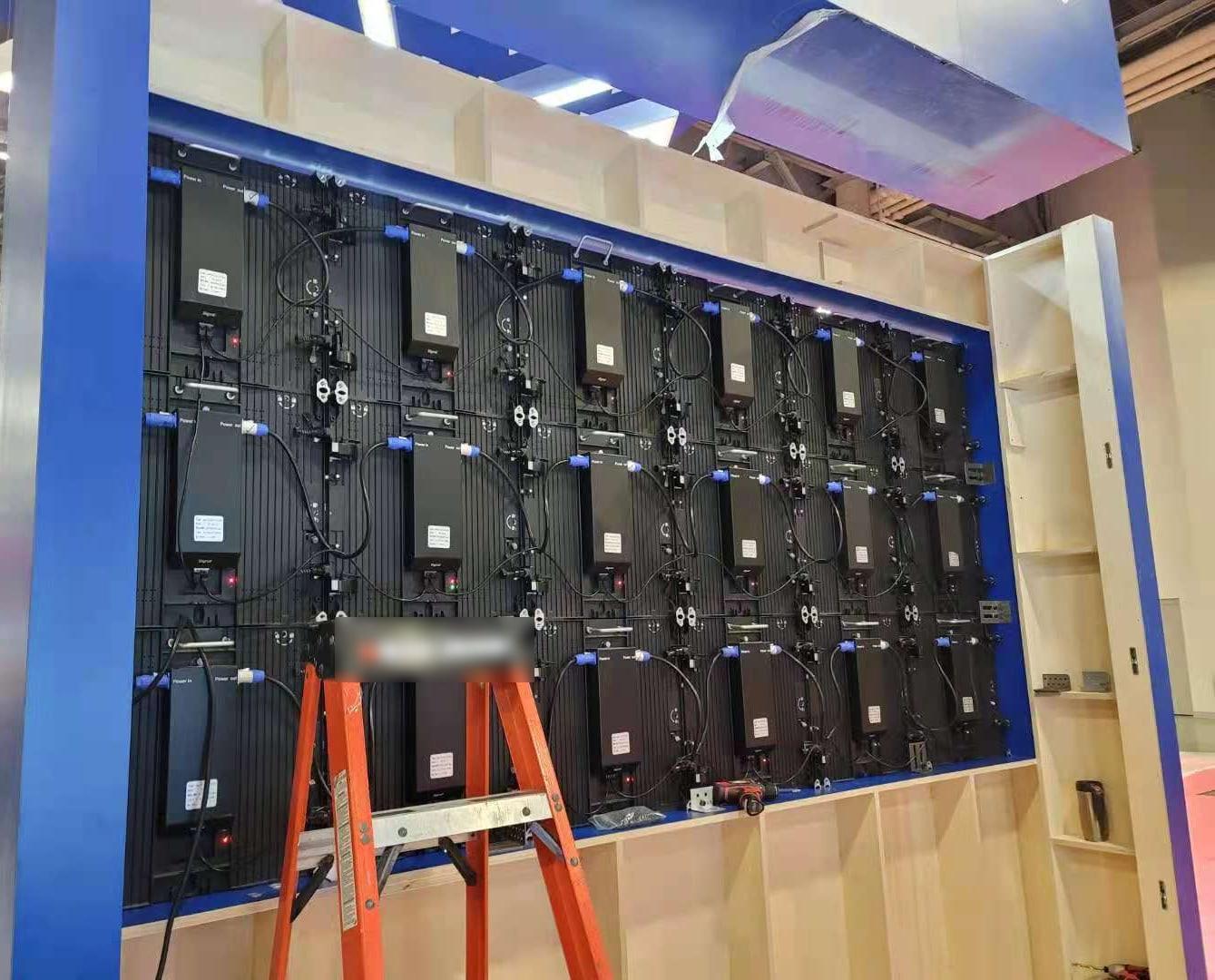
An embedded wall sits in an opening in a booth wall. The booth structure carries the weight, and brackets fix the panels to posts or a frame inside the opening. The booth needs room behind the wall so the crew can reach the cables.

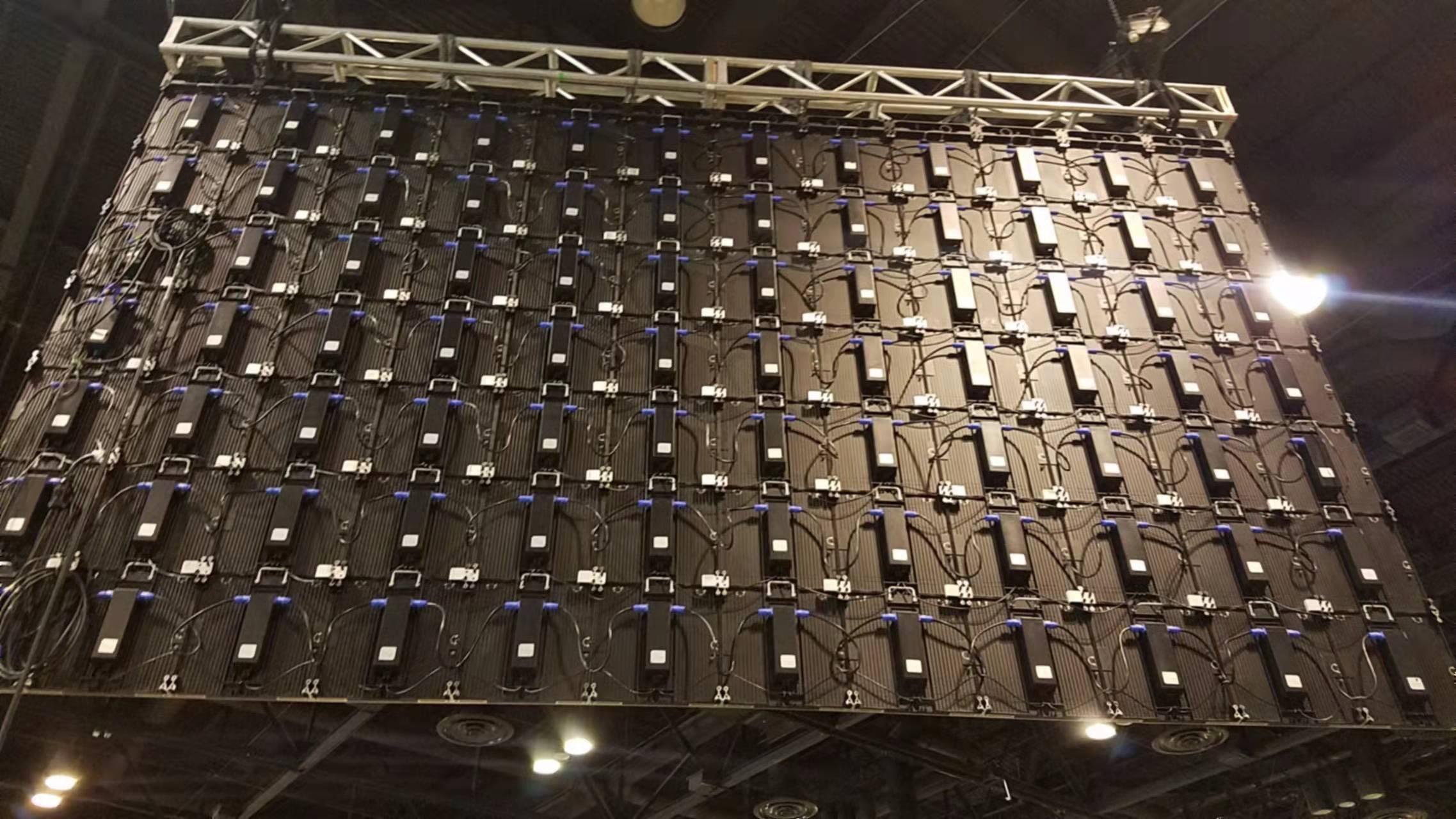
A hanging wall is fixed to a truss or a bar along its top and lifted on chain hoists. The venue must approve the rigging points.

On every type, power and data cables run from panel to panel across the back. Our crew builds the wall and runs the cables on site, and takes it all down after the show.
More galleries

Keep browsing.

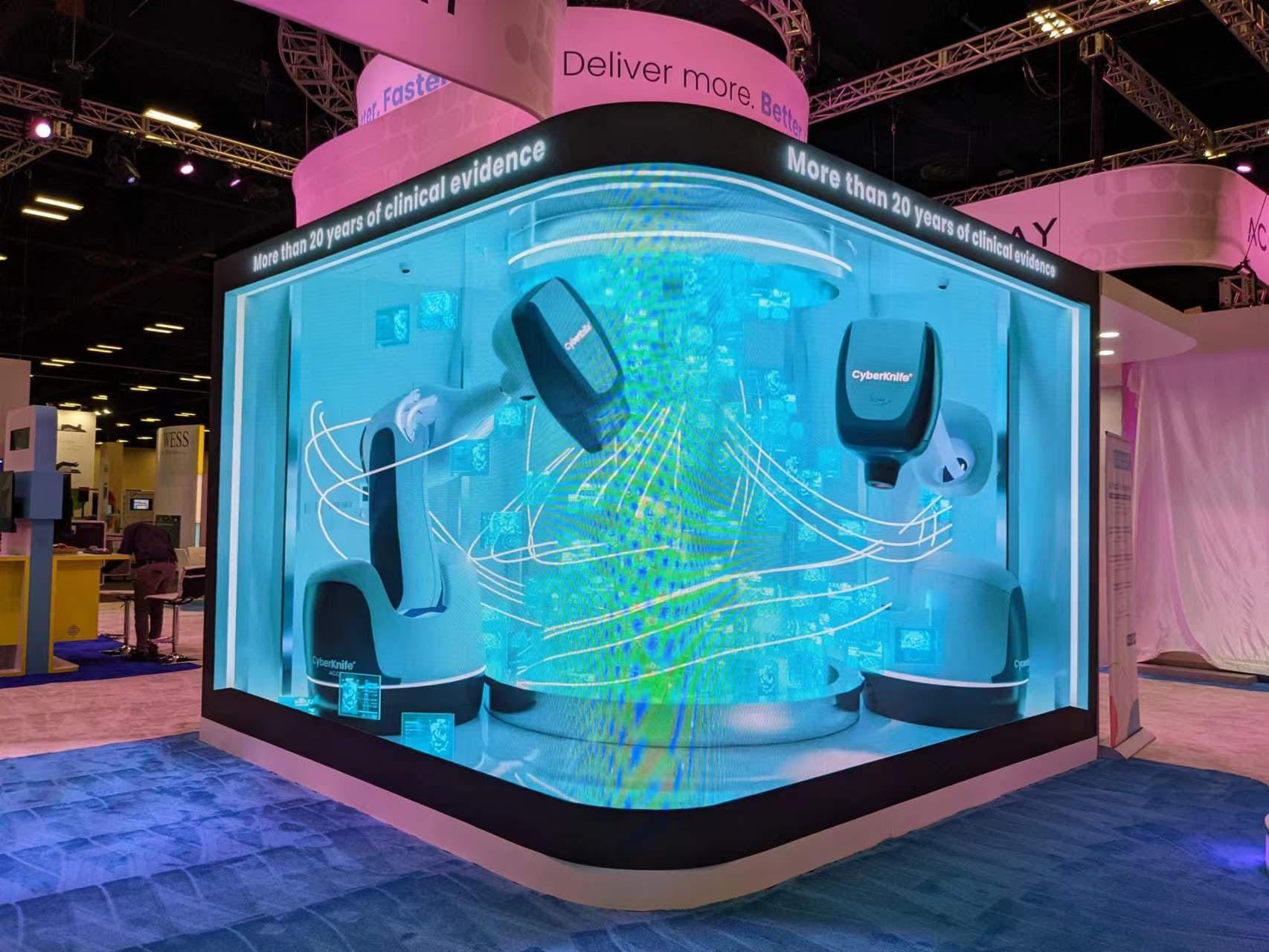
LED wall wrapping a rounded corner of a glass exhibit box, showing 3D content

Curved LED walls

Concave, convex and wrapped LED walls.

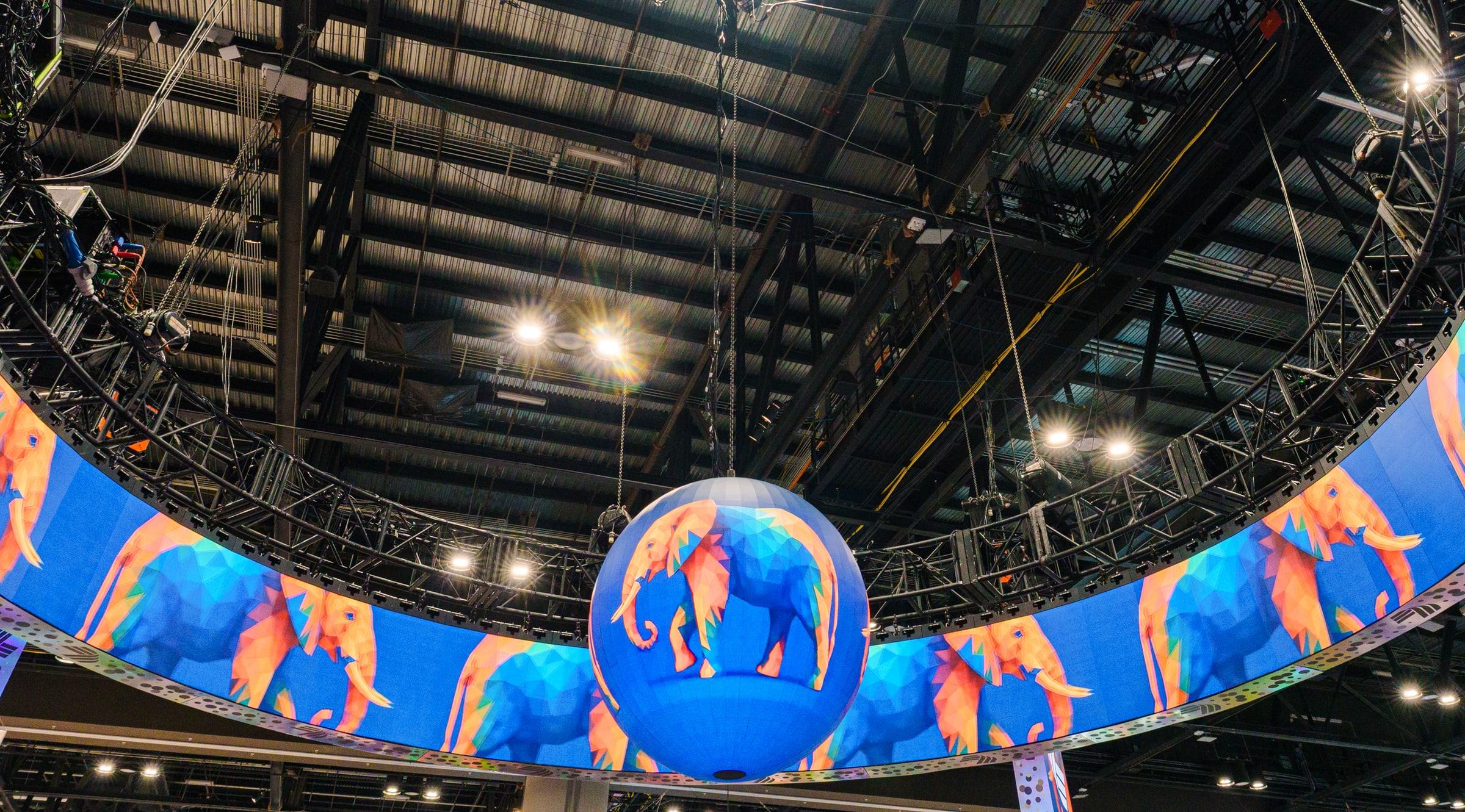
LED sphere playing a colorful elephant, hung inside a flown LED ring playing the same elephants, at the LexJet booth

LED spheres

Spheres on the floor or hung overhead.

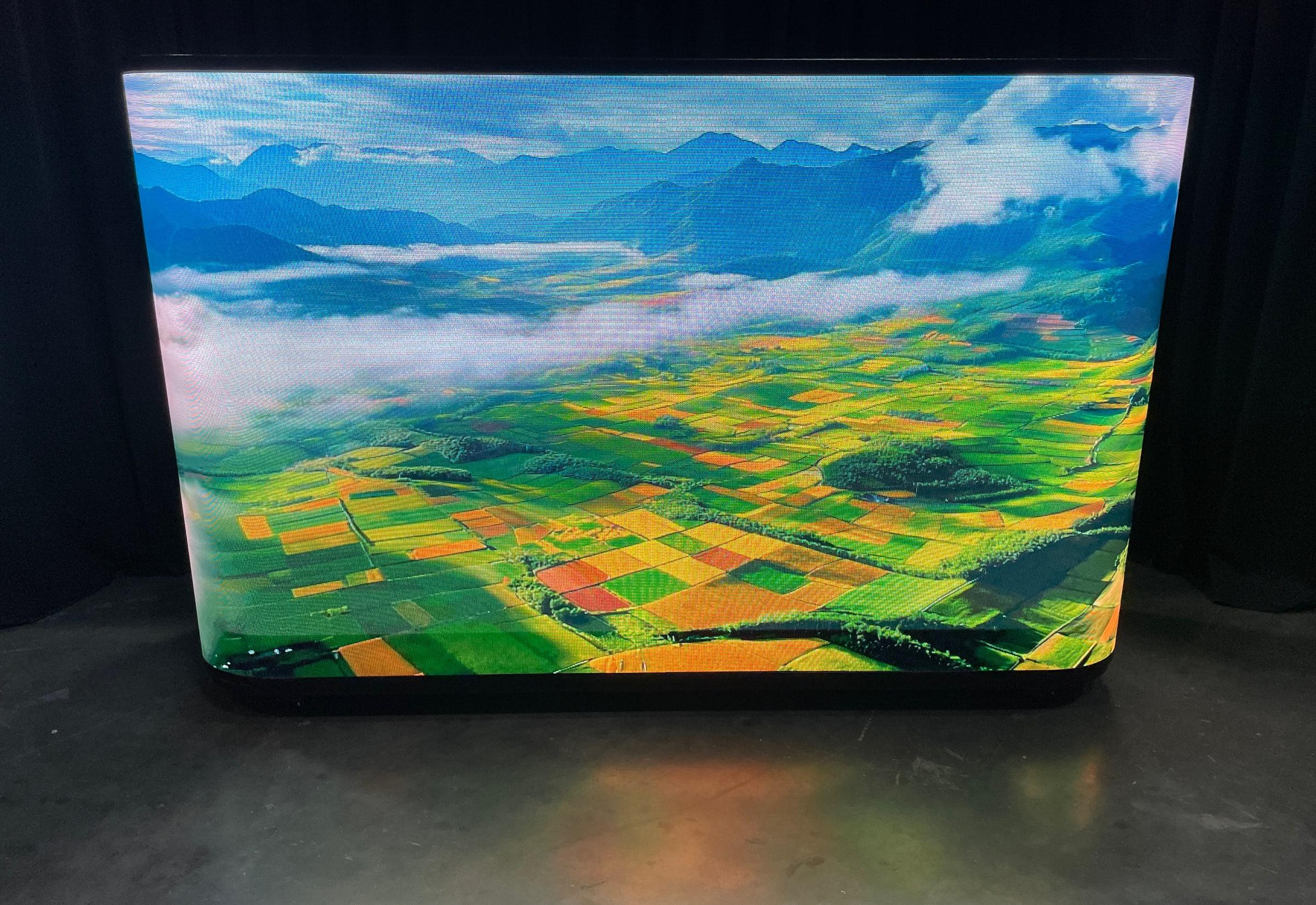
66-inch curved LED counter seen straight on, showing farmland from the air, on black drape

Counters & podiums

Curved, corner and round LED counters, and an LED podium, at shows and in the studio.

Ready?

Want one like these?

Send us the show and your dates. We'll send the quote.

Get a quote